
Checkpoints: Vapor's Trail
A down-to-earth conversation with Lt. Col. Nichole "Vapor" Ayers ’11
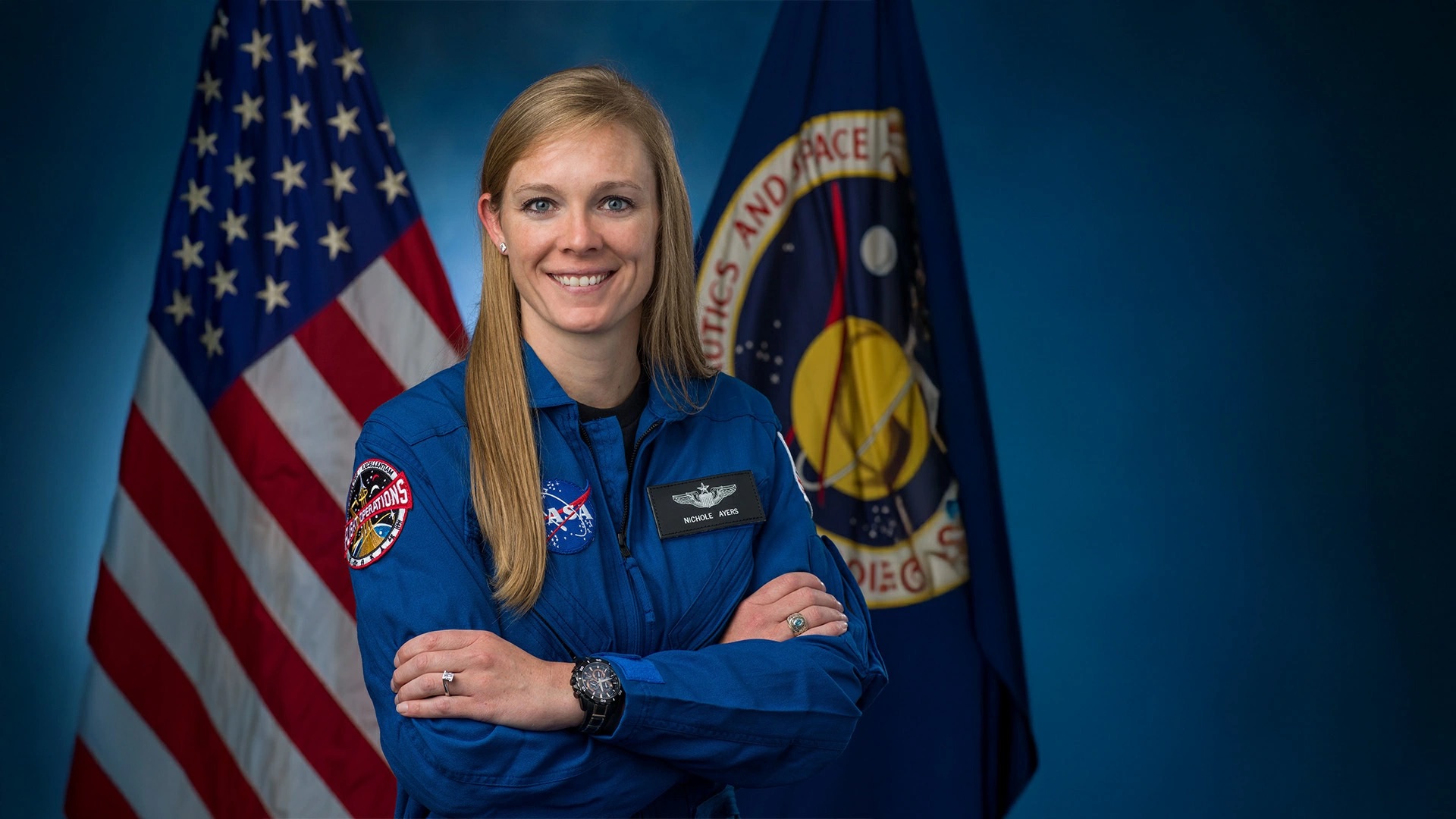
Growing up in Colorado, Lt. Col. Nichole “Vapor” Ayers ’11 became familiar with the roar of Thunderbirds flying high above the Rocky Mountains.
As a teenager living in the rural mountain town of Divide, Col. Ayers would graduate from high school in Woodland Park, a short but steep drive up Ute Pass west of Colorado Springs and, as the crow (or falcon) flies, not that far from the U.S. Air Force Academy.
While the view from the “City Above the Clouds” — nestled at 8,500 feet in the shadow of Pikes Peak — is spectacular, Vapor, as she would one day be known, already had her sights set higher.
While at the Academy to speak at the 2026 National Character & Leadership Symposium, Col. Ayers, a 2022 Young Alumni Excellence Award recipient, sat down with the Checkpoints team.
TEAMWORK MAKES THE DREAM WORK
Before she ever strapped into a fifth-generation fighter or rode a rocket into orbit, Col. Ayers, as a kid, shared with her family her passion for space by dragging them away from the city to escape the light pollution and watch meteor showers. “I always had an affinity for the sky and for space,” she says.
Col. Ayers also recalls deciding at a young age what she wanted out of life. “I knew that you could fly the Shuttle and decided, ‘That’s what I want to do,’” she says. “And then watching the Thunderbirds fly over every year seemed like a natural way to get to NASA. I was kind of a very serious little kid that set my goals really high and just started working toward them.”
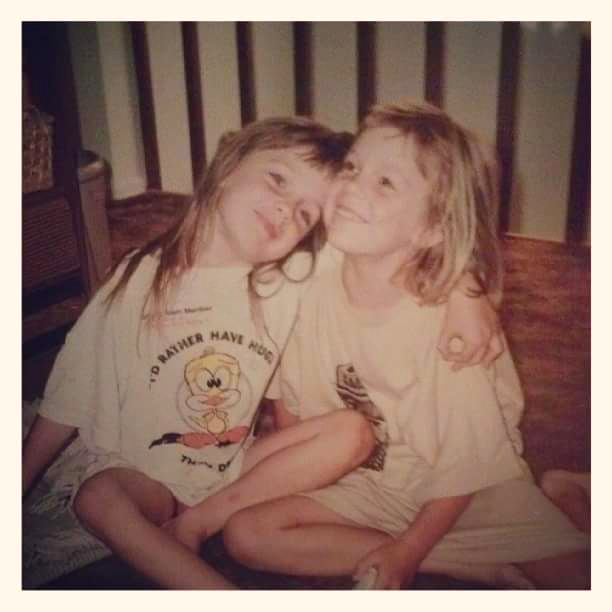
Col. Ayers says her ambitions had no familial precedent. Family members had served — two grandfathers in Vietnam and a father who spent four years as a U.S. Marine — but she grew up largely outside military culture. The decision to join the profession of arms was hers. Her parents didn’t flinch at her ambitions, she says. Neither did her twin sister, Cydnee, her “built-in best friend” and one of her fiercest supporters. Even her high school volleyball coaches reinforced the habits that would carry her far beyond Teller County — hard work, teamwork, composure under pressure.
“I loved working hard, being on teams and playing team sports,” she says. “So they really fostered the teamwork aspect of my life. That’s what really helped me excel as well.”
ALL SYSTEMS GO
By seventh grade, Col. Ayers had a plan. “I was like, ‘All right, serving in the Air Force is what I want to do,’” she says.
Then came Sept. 11, 2001.
She watched the country change overnight, but the pull to serve only became greater.
“You start to think, ‘This is real. Serving our country is a huge commitment. It’s a huge sacrifice’,” she says. “There was a time there where I kind of wavered on whether I was doing this for some other random goal, or doing it because I want to serve the country. And ultimately, service is at the top of my reasons for going to the Air Force Academy, and flying airplanes was a great bonus.”
Col. Ayers talks about when she first learned she earned an appointment to a military academy — but it wasn’t the one in her home state.
“I got a nomination to the Naval Academy, and I was kind of bummed,” she says. “I applied to both, but I really wanted to be in the Air Force and fly Air Force jets.” Then she got the news she’d been waiting for. The standout high school athlete had been recruited to play volleyball for the Falcons. “I was ecstatic, and getting to play volleyball here was just a little cherry on top,” she says.
At inprocessing, though, that ecstasy turned to sobriety, as it does for many.
“You start basic training and it’s not a university at that point,” Col. Ayers says. “I remember walking around like, ‘Did I make the right decision? Should I be here? What am I doing with my life?’”
The yelling, the intensity, the shock to the system — it was all real. But so was the community. Being a recruited volleyball player gave her an early foothold as her teammates became anchors.
Academically, she thrived in math and science, but the Academy demanded more than aptitude. “It’s a juggling act,” she says. “It’s all about time management. How am I going to manage the academics and the homework with the military expectations? And then as an intercollegiate athlete, you’ve got even more time that you spend outside of the academics and the military side.”
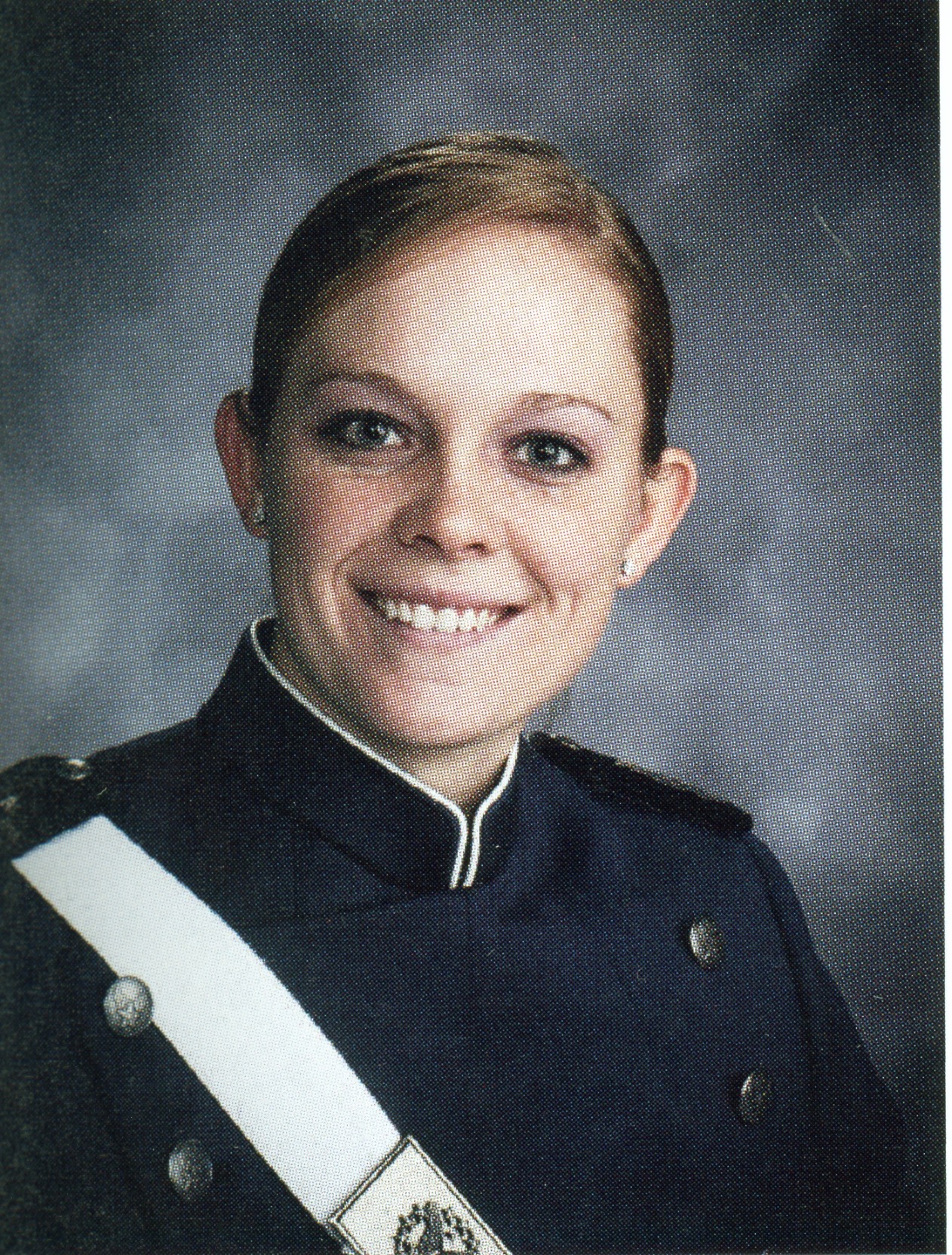
Col. Ayers majored in mathematics and minored in Russian, eventually spending a semester in Ukraine. Her academic adviser, Dr. Kurt Hertzinger, encouraged her to pursue both the technical rigor and the broader perspective.
Leadership roles followed: She became a squadron commander over the summer before her firstie year and cadre for basic training. On the volleyball court, she led less by title than by presence. “I would call it an on-the-court leader,” she says. “That’s where I thrive, taking care of people in pressure situations.”
After commissioning in 2011, Col. Ayers headed first to graduate school at Rice University, earning a master’s degree in computational and applied mathematics, though NASA didn’t yet require a master’s degree.
“As a lifelong learner, I wanted to get a master’s degree right out of the Academy,” she says.
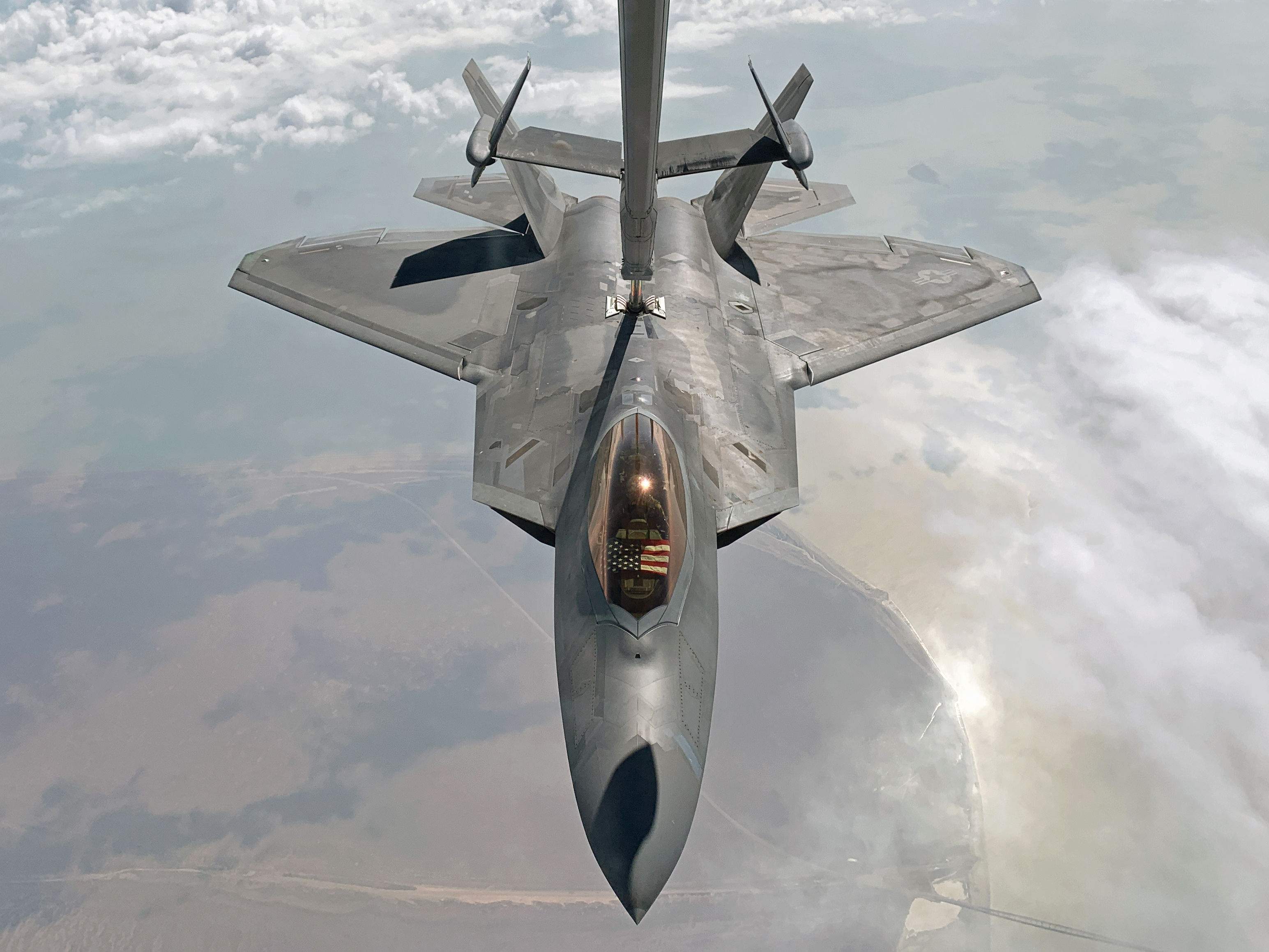
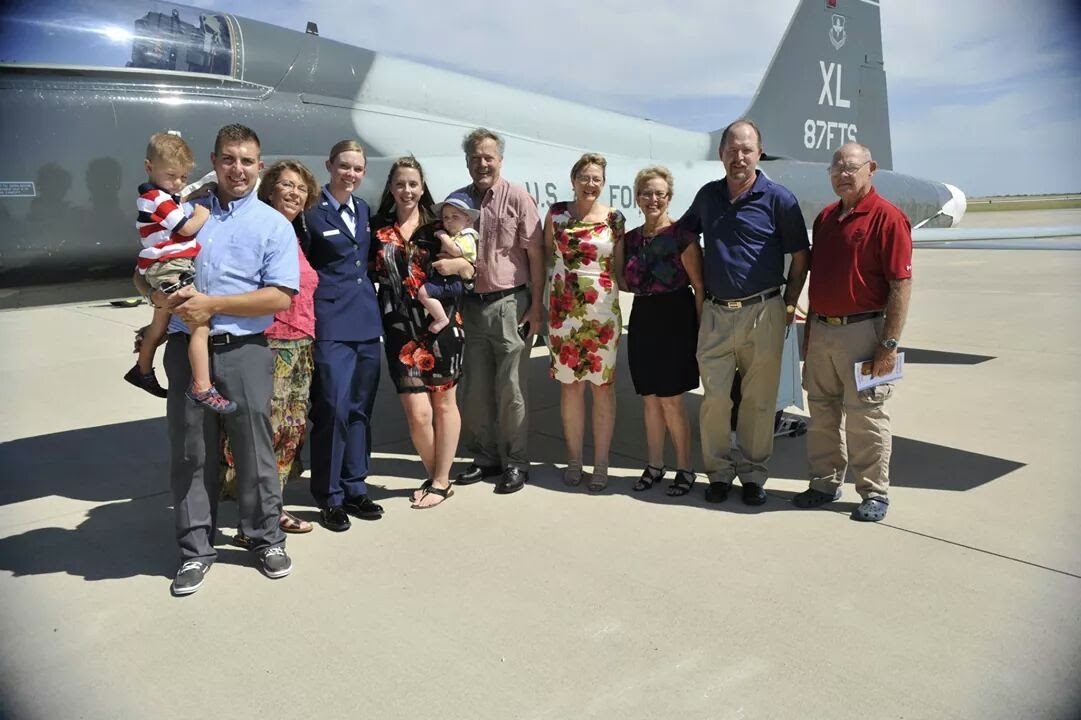
Pilot training followed in Del Rio, Texas, then the T-38 and, ultimately, the F-22 Raptor at Langley Air Force Base, Virginia.
THE RAPTOR FACTOR
Getting into the Raptor was a milestone, she says. “I loved it. I grieved leaving the F-22 community and leaving that life behind, but it was always just a steppingstone to NASA. But I would have been really happy in the job if I had not gotten to NASA,” she says.
In 2019, as a flight commander, she deployed on short notice to Al Udeid Air Base in Qatar in support of Operation Inherent Resolve over Syria. Seven days later, she sat in the cockpit flying combat missions.
Col. Ayers shares the details of one mission in October of that year. Airborne over Syria, refueling from a tanker, she received word that Turkish F- 16s would drop bombs in a specific “kill container.” Then she realized she was inside it. “I had us turn south,” Col. Ayers says. “And then we all watched as Turkish F-16s flew 20 miles behind me and dropped their weapons where I was four minutes prior.”
She says that, on the way home, she watched a thunderstorm stretch from Jordan to Iran; she was also on a check ride with her squadron commander.
“It was one of those moments where your heart rate might be a little high, there’s a little bit of fear in there, but you’ve got to keep going,” she says. “You’ve got to make decisions and get people moving.”
Leadership in combat and making realtime decisions with real consequences solidified everything the Academy had instilled, she says. She knew she was ready.
SUIT UP
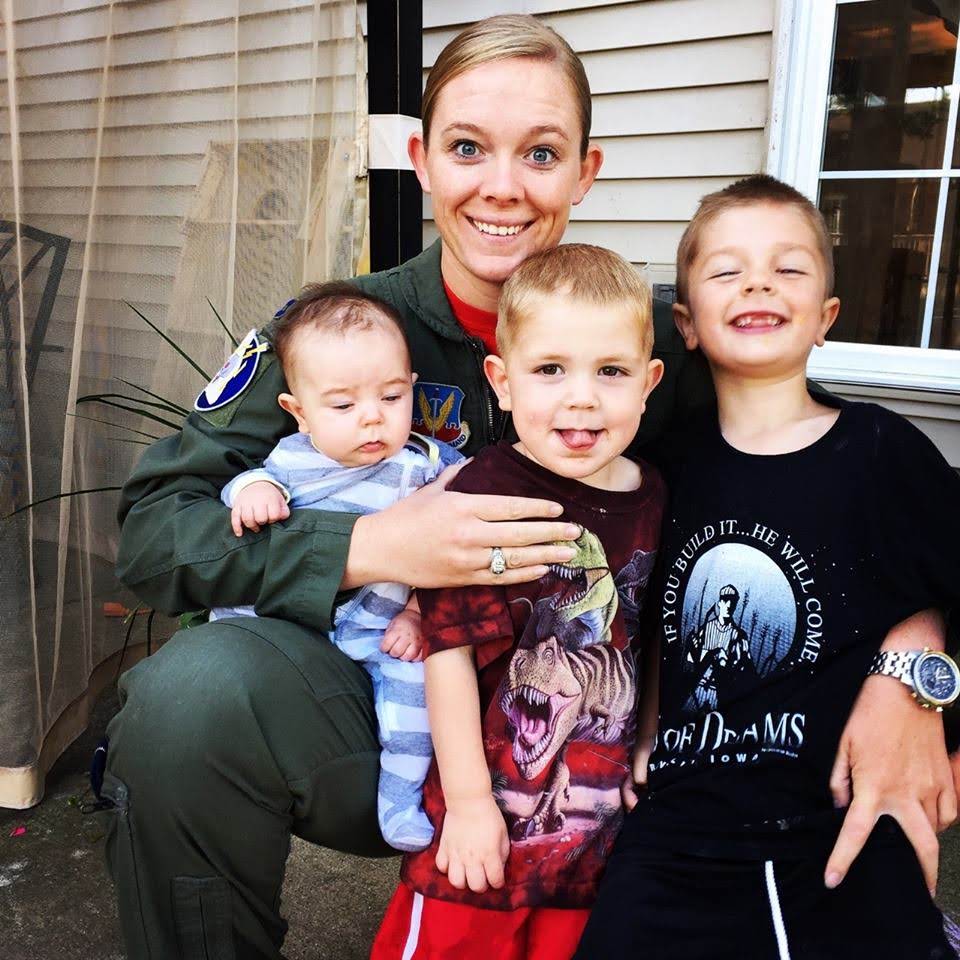
In March 2020, Col. Ayers applied to NASA — along with 12,000 others.
About 120 were invited to first-round interviews. Thirty made the final round. Ten were selected.
The phone call came while she was in Florida with her sister’s family, riding back from Disney World.
“I get a phone call from Texas,” she says. “So I’m on the phone with Reid Wiseman, who was the chief of the astronaut office at the time. He asked me if I still wanted to work with NASA, and I reached over and grabbed my sister’s arm, and it was just a twin thing. She knew before I said a word what was happening.”
But someone beat her to the announcement.
“My niece jumps out of the car and runs around to her brothers, and she’s like, ‘Auntie’s gonna be an astronaut!’ She totally stole my thunder, but it was the best way for someone to steal my thunder,” Col. Ayers says.
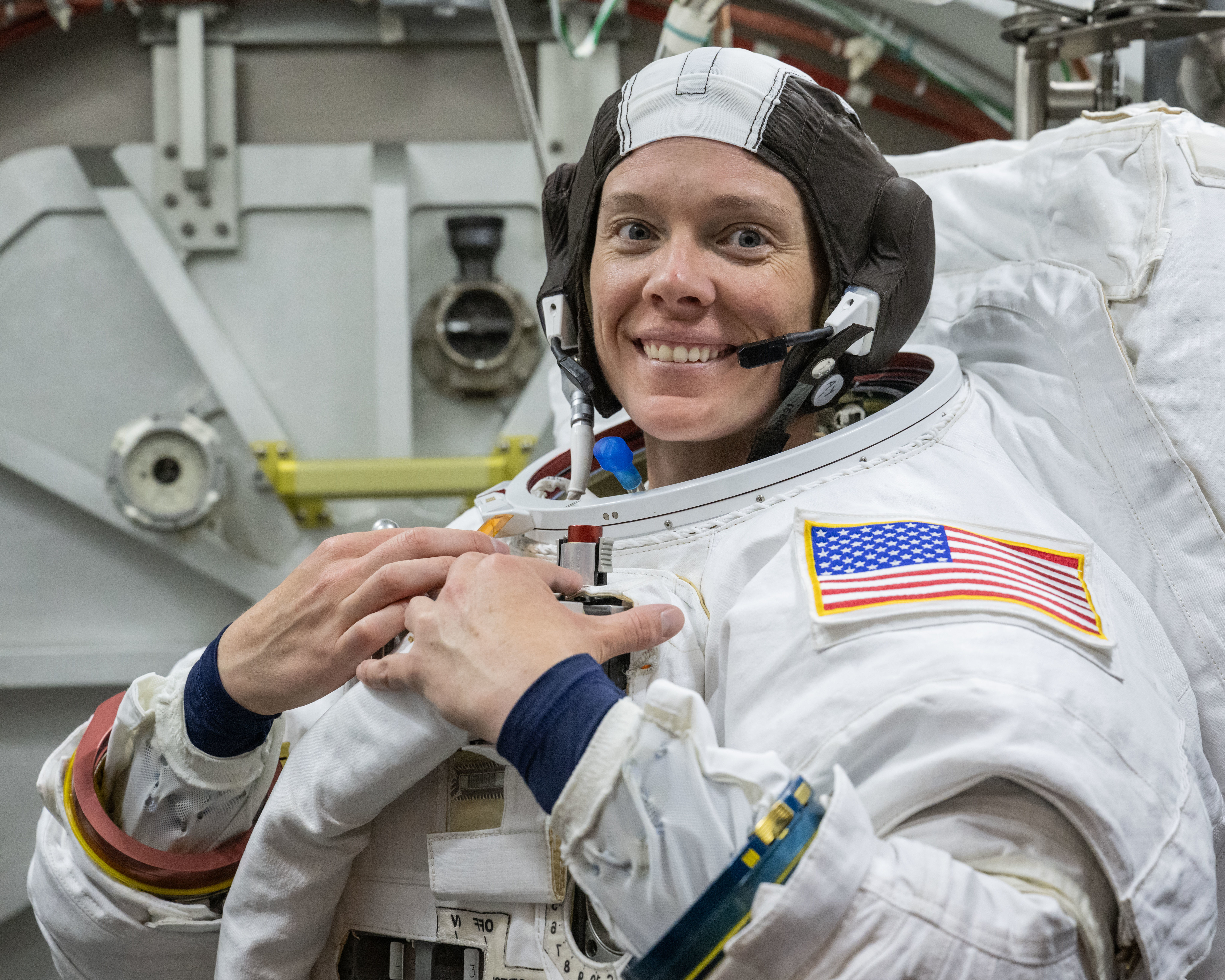
Once at astronaut training in Houston, Texas, Col. Ayers says she found new challenges.
The most grueling part? Spacewalk training in the Neutral Buoyancy Laboratory — a 6-million-gallon, 40-foot-deep indoor pool used to train astronauts for spacewalks by simulating microgravity. The pool houses a submerged mock-up of the International Space Station.
“You’re in the suit for six hours,” she says. “It’s mentally fatiguing, but it’s also the most rewarding part.” The suit is heavy on Earth. Safety divers adjust weights and foam until astronauts achieve neutral buoyancy. Then the work begins.
“We practice every skill that we could need,” Col. Ayers says, adding that in space, pilots, doctors and engineers all become flight engineers. On the International Space Station, everyone does the same job. “It’s actually pretty cool,” she says.
THE HUMAN SLINGSHOT
Launch day felt familiar — almost like a simulator — until it didn’t. “You can hear the valves moving. You can hear the propellant being loaded. The rocket is alive,” Col Ayers says, adding the ride wasn’t like anything she’d experienced before.
“I felt like we got slingshotted off the Earth,” she explains. From roughly 4 Gs to zero G and back again, the experience was taxing. But fear never entered the equation.
“I don’t think fear is an emotion that I would use,” Col. Ayers says. “Excitement, gratitude, I was ecstatic.”
Over five months aboard the real ISS, she and her crewmates conducted hundreds of hours of research. Cargo vehicles arrived like moving trucks and experiments filled their schedules.
One example: Ring sheared drop examined how protein crystals form and behave in microgravity — research that could accelerate pharmaceutical manufacturing for treatments targeting cancer and Parkinson’s and Alzheimer’s diseases.
“For us, that science experiment shows up as an hour chunk on your schedule,” Col. Ayers says. “But that scientist is often watching as you perform their science. And for me, you know that is somebody’s life work.”
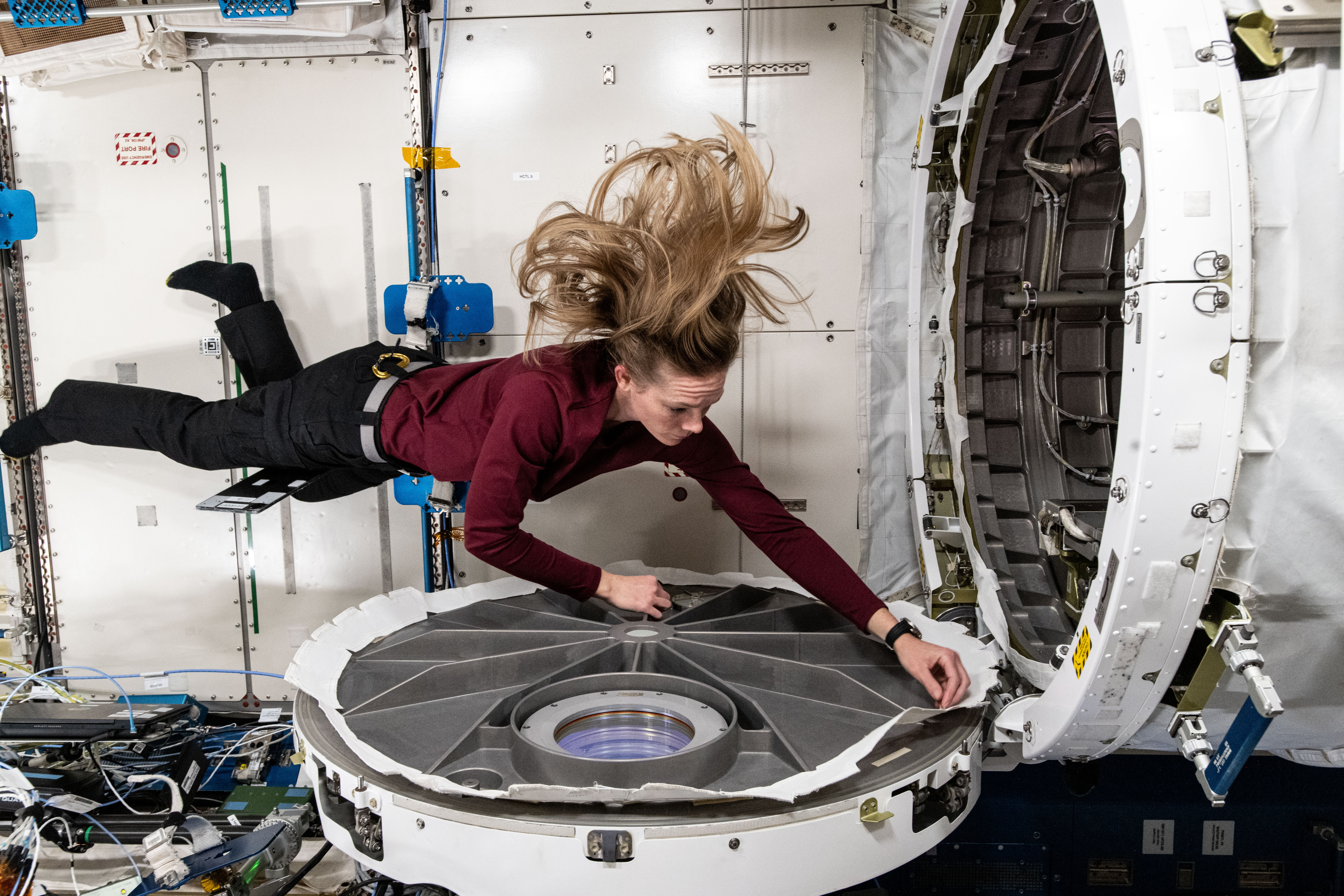
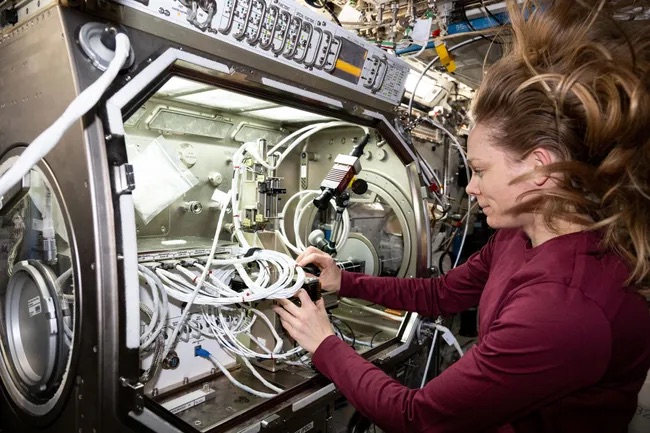
Between spacewalks and maintenance, there were lighter moments. During a live outreach event with children, Vapor flipped sideways to demonstrate the absence of up and down — and knocked a floating Astrobee robot loose.
The free-floating robot kept photo bombing her as she tried to speak to the audience. “Finally, I had to toss it up into a different space so that it would stop floating into my hair,” she says. “We were dying laughing after that.”
Col. Ayers also shares that she took photos of Colorado from orbit — she could make out the glow of Denver and Colorado Springs and trace the line of Highway 24 climbing toward Woodland Park. “You could almost see Divide,” she said. “But it’s, like, one tiny light.”
BLEEDING SILVER AND BLUE
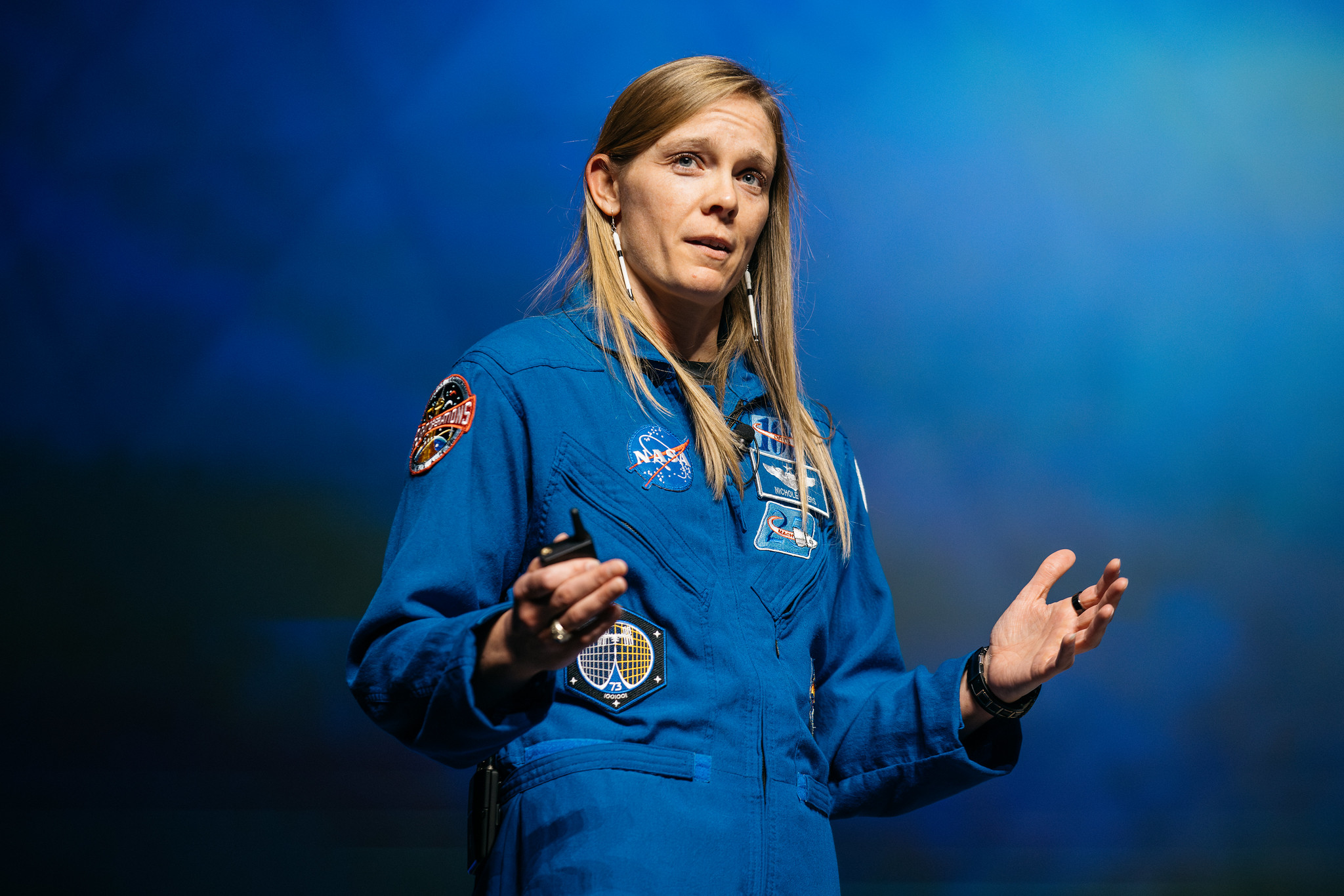
In orbit, Vapor wasn’t just an astronaut. She was an Air Force officer who wore her Academy pride on her sleeve — literally. “I have a lot of pictures of me in Air Force shirts on the space station,” she says.
At one point, graduates from all three service academies shared the station — including two from USAFA (Brig. Gen. Nick Hague ’98 was the other). “I’m proud to represent the Air Force,” she says. “You know, I’m a pilot by trade, and I will always be a pilot.”
Col. Ayers says, if she could go back and give her cadet self some advice, it would be simple: “I would say, don’t give up, keep going, but also, don’t take yourself too seriously.”
She also shares her opinions on what may be next for human space travel.
“We will get to Mars,” she says. “I don’t know if it’ll be in my lifetime, but I would go to space in any capacity. … As long as I could help further humanity.”
Her parting thoughts include a shout out to her alma mater, where she admits she didn’t learn to be an expert in one thing, but to be flexible enough to learn anything.
“The Academy sets you up really well for life,” she shares with today’s cadets. “You learn how to push through the tough moments, even when you don’t feel ready or you’re a little scared or you have a little self-doubt. You learn how to take each step and keep moving forward. And those are some of the major skills that I learned here that I took forward into my professional career, and it’s worked out really well for me.”