
Checkpoints: In Service to Something Larger
From a police officer’s son in Flint, Michigan, to the FBI’s highest-ranking Air Force veteran
It was a Sunday morning on Pearl Street in Boulder, Colorado.
A suspect attacked participants in a peaceful walk supporting Israeli hostages held in Gaza, hurling — without any warning — Molotov cocktails into a group, injuring 15 people. One of the victims later died.
Boulder was international news before the flames were out. Within minutes, a plan to protect the community, respond to the tragedy and bring order to the chaos was already in motion.
As the special agent in charge of the FBI’s Denver field office, Mark Michalek ’99 was accountable for the response.
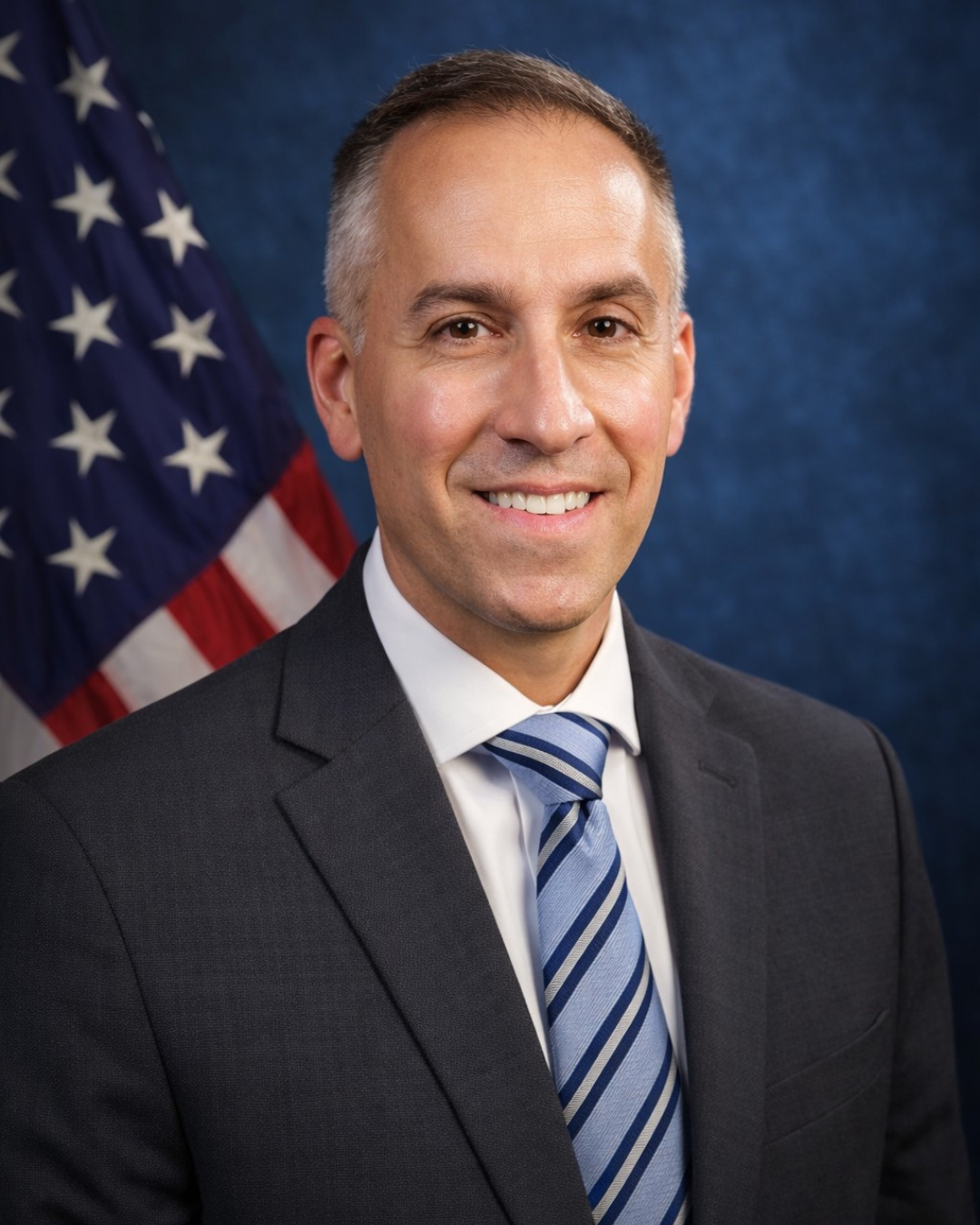
Within an hour of the attack, his phone died from the volume of incoming calls — the White House, FBI headquarters, local law enforcement and elected officials all demanded answers, coordination and command.
“Leadership is really tested because it doesn’t happen on a Monday at 8 a.m. when you’ve had your coffee and you’re ready to go,” Michalek says. “You’ve got to be that steady hand to land the plane.”
The Denver office moved immediately. Tactical teams, behavioral analysts, forensic specialists, evidence collection and federal charging considerations were all coordinated in real time while cameras rolled and the public watched.
The suspect was identified, arrested and charged.
The speed and coordination reflected years of deliberate investment in readiness, interagency alignment and decision-making under pressure.
That tragic Sunday in Boulder was no horrifying anomaly; it was a scenario the Denver office had been preparing for long before Michalek arrived as special agent in charge.
Colorado’s history demands it: Columbine (1999), the Aurora theater shooting (2012), the Boulder King Soopers shooting (2021), the Club Q attack (2022) — a concentration of mass casualty events that has made the state’s law enforcement among the most battle-tested in the nation.
“You do exercises, you plan, you refine processes and protocols,” Michalek says. “Unfortunately, we’ve had so many reps in this kind of work that when that flare goes up, we’re able to meet what the moment requires.”
The preparation he speaks of extended beyond tactics to include building repeatable systems that could scale across incidents, jurisdictions and leadership transitions.
And that instinct — running toward what others may run from — has been Michalek’s operating principle his entire life.
The discipline behind it was built at the Air Force Academy, but the calling that drove him there started in Flint, Michigan, when he was a child.
WHERE THE CALLING BEGAN
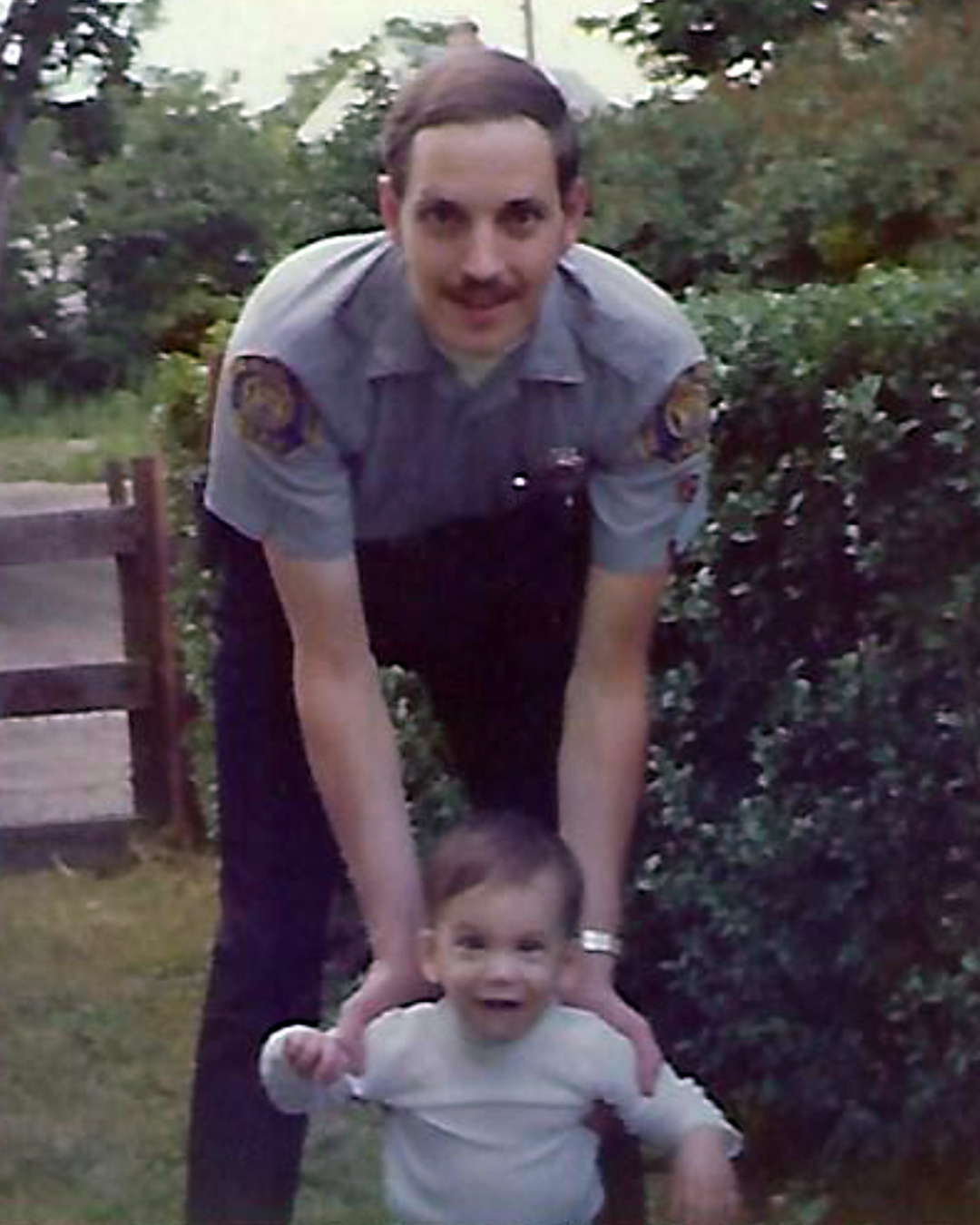
Michalek’s father was a Grand Blanc Township police officer, and some of Michalek’s earliest memories are wearing his dad’s uniform, of squad cars idling outside soccer practice, of officers checking in on him.
When his father died by suicide, the police department closed ranks around the only child he left behind, planting in the young boy, only 5 years old when he lost his dad, a deep, lasting commitment to public service that never left him.
By high school, that commitment had merged with a second obsession — aviation — and Michalek earned his private pilot license at 17.
The U.S. Air Force Academy became the logical intersection of both, though getting there took an extra year.
A Falcon Foundation scholarship sent him first to Marion Military Institute in Alabama. It was a detour that stung at 18 and paid dividends at 19.
At USAFA, he chose behavioral science, a decision rooted in equal parts practicality and grief. “I’ve always had an interest in psychology,” he says, adding that he wanted “to understand the depths of depression that would lead somebody to leave a 5-year-old and their wife.”
He describes his four years at USAFA as a game of survival, but survival at the Academy is anything but passive.
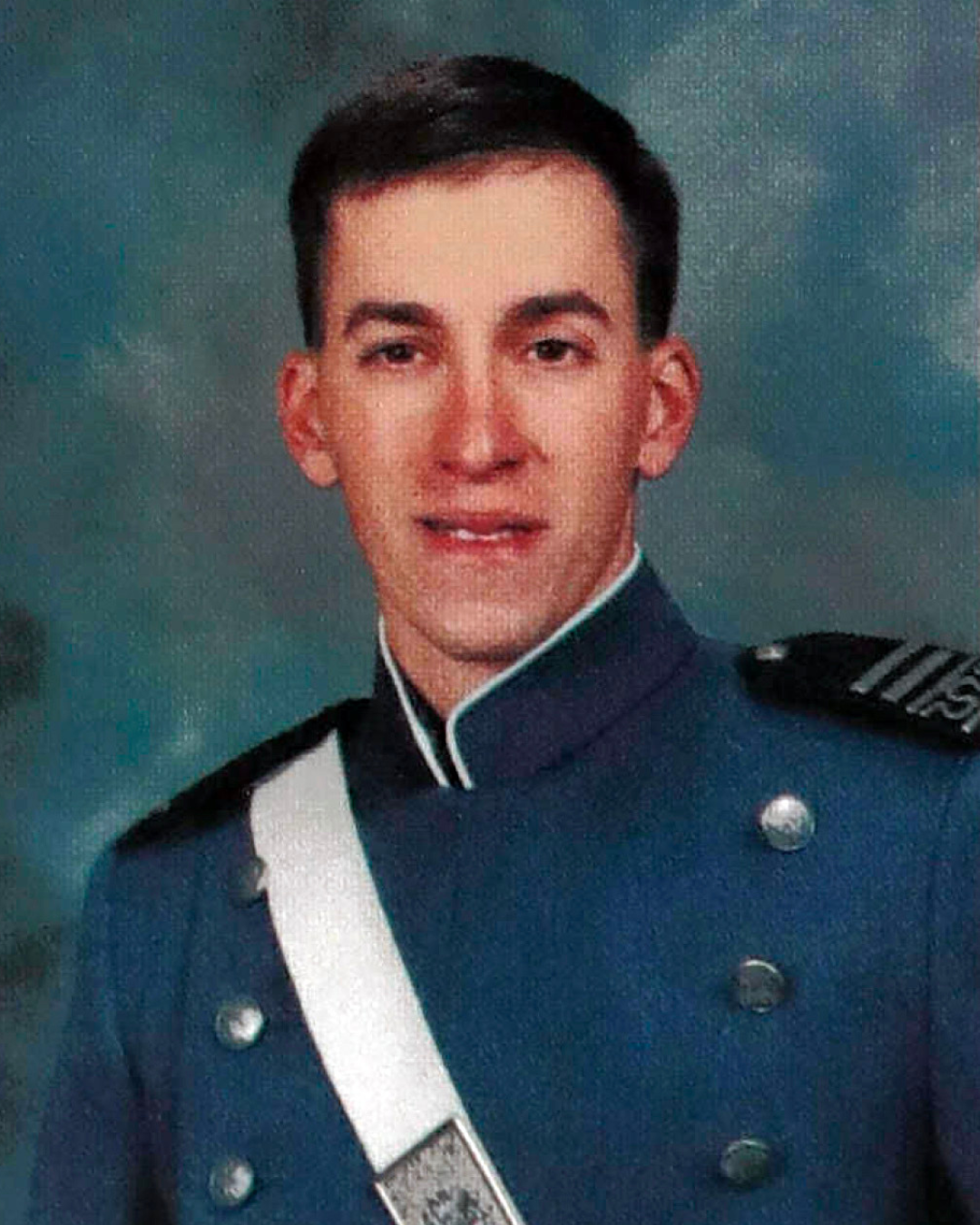
Michalek and two classmates built a cadet first responder team from scratch, earning their EMT certifications on their own time and assisting medics during a stretch when the Class of 2001 was pushed hard through recognition.
That team still exists today as an established cadet club. He graduated on June 2, 1999 — 43 days after a pair of students walked into Columbine High School in Littleton and wrought tragedy on a community and the country.
The massacre happened fewer than 60 miles from where Michalek had spent four years as a cadet, already EMT-certified, already running toward problems for a living.
Spending the next several years wanting to put the Academy experience behind him, he could not have known then that Colorado would become the defining theater of his career.
“It’s kind of a boomerang,” he says of the perspective he, like many USAFA graduates, gained as the years passed. “It takes time to fully appreciate what you’ve gone through.”
NUCLEAR CONVOYS TO QUANTICO
Michalek commissioned into security forces and reported to F.E. Warren Air Force Base, Wyoming, where he ran nuclear weapons convoys across three states as a 23-year-old second lieutenant responsible for a flight of 40 airmen.
“F.E. Warren was the first practical lab for leadership,” he says. “It was no longer theoretical. This had consequences.”
From Wyoming, he moved to Ramstein Air Base in Germany, where his unit operated outside the wire in the largest American population in Europe, handling external policing, traffic response and on-scene command of critical incidents.
His final Air Force assignment took him to Wright-Patterson Air Force Base, Ohio, to oversee security forces training across Air Force Materiel Command, his first sustained exposure to enterprise-level thinking and the challenge of aligning priorities across a large organization.
Six years after commissioning, Michalek made a life-altering decision. “I wasn’t running away from something,” he explains of his decision. “I was running towards something.” He left the Air Force for Quantico in 2005. He was 29.
The transition changed everything. The chain of command flattened and the uniform disappeared. Working across multiple agencies, civilian courts, and local partners meant dealing with people who had no obligation to follow orders. It required a completely different toolkit than the military. “You’ve got to apply different soft skills,” he says of his transition. “More carrot than stick.”
What didn’t change was the mission focus, the camaraderie and the sense of being part of something consequential. “If you’re going to make the jump from active duty, this was an easier jump than other types of civilian jobs,” Michalek says. “The themes are very consistent.”
HOUSTON: A LIFE ALIGNED TO PROTECT OTHERS
His first assignment was the Houston field office, where he worked violent crime in a city gripped by a systemic bank and armored car robbery epidemic — heavily armed organized crews terrorizing bank employees and customers and driving the robbery rate through the roof.
Still, Michalek was home.
“I just couldn’t believe this was my life,” he says. “Everything was aligned, and I was doing exactly what I felt like I was meant to do.”
He describes walking into a bank robbery scene: yellow tape across the block, squad cars at every angle, witnesses crying on the curb, blood on the tile, cameras pressing against the perimeter — chaos, compressed and loud.
“Responding to bank robberies, helping victims of crime, protecting the community — that was the work that energized me most,” he says. “I absolutely loved it.”
Over a decade of violent crime work, Michalek developed a proactive model for dismantling serial offenders before they could strike again.
His signature case involved a 16-member crew that had robbed 22 banks, recruiting teenage neighborhood boys they called “crash test dummies” to conduct the actual entries, cycling through different faces to defeat witness descriptions. The ringleader never set foot inside a bank.
Michalek built the case from the inside out: a cooperator, cell phone data, gun tracing and forensic patterns linking incidents that had appeared unrelated. When surveillance confirmed the crew was staging stolen cars near a target bank, agents moved first.
All 16 were convicted on federal charges, and the ringleader was sentenced to 90 years in prison with no possibility of parole under federal law.
Houston’s robbery rate dropped in the years that followed, in part because Michalek’s team began taking more cases federal, sending a message to offenders who saw state charges as often producing lighter sentences and quicker releases.
The approach emphasized proactive disruption, data-driven targeting and alignment with federal prosecutorial strategy to create sustained deterrence.
THE ROAD BACK
After a decade in Houston, Michalek moved to FBI headquarters as a supervisory special agent managing the Ten Most Wanted program, using media strategically to generate leads and drive apprehensions across the nation’s most visible fugitive initiative.
He then returned to Houston to supervise a public corruption and fraud squad. The opposite of violent crime, the work was painstakingly slow and methodical, with cases built over years rather than hours.
Along the way, Michalek earned a master’s degree, got married, became a father of twins and was assigned to the San Diego field office. After 13 years there, the longest he had ever stayed anywhere, he was selected as assistant special agent in charge, overseeing SWAT teams, crisis negotiation and bomb technicians while serving as onscene commander for major arrests and critical incidents.
From San Diego, he entered the senior executive service, returning to Washington, D.C., as a section chief over the bureau’s employee health portfolio, covering clinical staff, psychologists, psychiatrists and social workers.
It was a deep immersion in the intersection tion of organizational performance and human well-being, and it planted seeds he would later cultivate in Denver.
“It was the honor of my professional career,” Michalek says of his Denver assignment.
He took command of the Denver field office in 2023, covering Colorado and Wyoming across nine satellite offices with roughly 500 personnel.
Returning to the state where it had all started — USAFA, the mountains, the Front Range — felt like something more than coincidence. “This was my moment,” he says. “My moment to do lasting good, to make a meaningful impact, to drive culture.”
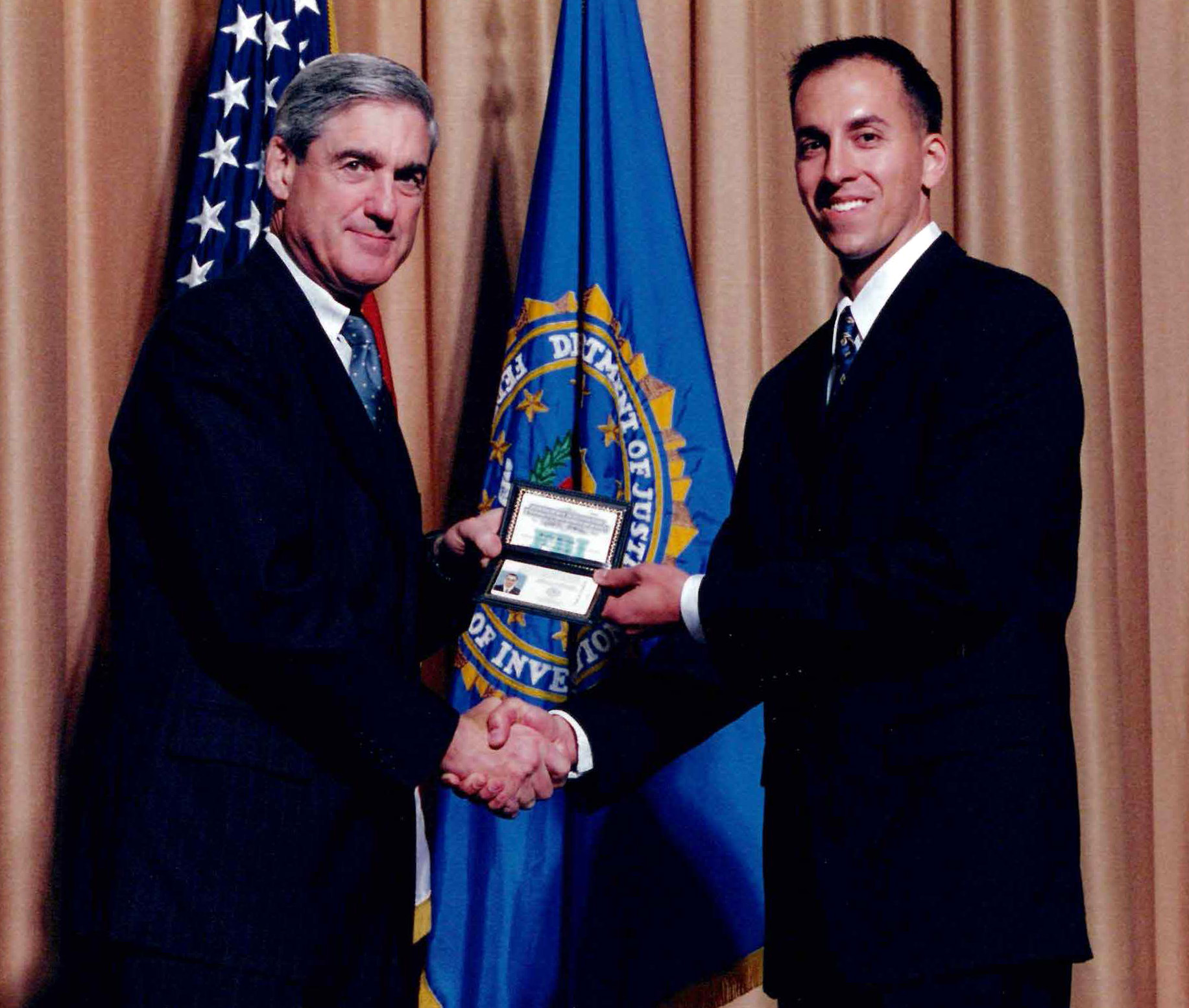
The tenure tested every dimension of that mandate, beginning with the state’s first espionage conviction, when an NSA employee was caught transmitting topsecret information to someone he believed was a Russian intelligence operative — who turned out to be the FBI.
Then came the horrors of Penrose. When local law enforcement responded to complaints of a foul smell at the Return to Nature Funeral Home in October 2023, they encountered a stench so severe it dissolved their protective gear, and they had to be rushed to the hospital.
Inside were 190 decomposing bodies stacked in coolers, stuffed in boxes and piled in rooms.
It was a case unlike anything the office had encountered.
“There is no playbook for that,” Michalek says. The response required integrating technical expertise, operational leadership and victim- centered communication at a scale rarely encountered.
The FBI brought evidence response teams, technical hazard specialists and a mass-casualty squad from Washington, D.C., stabilizing the scene and coordinating identification across the state through fingerprints, dental records and DNA.
Then agents drove to homes across Colorado with the worst kind of news. Some families had kept urns for years containing nothing but cement.
One father who was told his son had been identified among the remains said that was impossible — his son had been buried with full military honors. Investigators exhumed the casket and found someone else’s child inside.
“In this line of work, you see the full range of what people are capable of — but this was a complete institutional failure, with real consequences for families who trusted the system,” Michalek says.
Both owners were convicted on federal fraud charges; one was sentenced to 20 years and the other to 17. The investigation also revealed something about the people doing the work.
Agents suited up day after day in conditions that tested the limits of human resolve and endurance, and some knew midway through a shift that they had reached their limit. Michalek respected when they said so and stepped back.
“That’s what told me the culture was starting to resonate,” he says. “It’s OK to not be OK.”
Eight months later, the Pearl Street firebombing happened.
WASHINGTON: LAYING DOWN TRACK
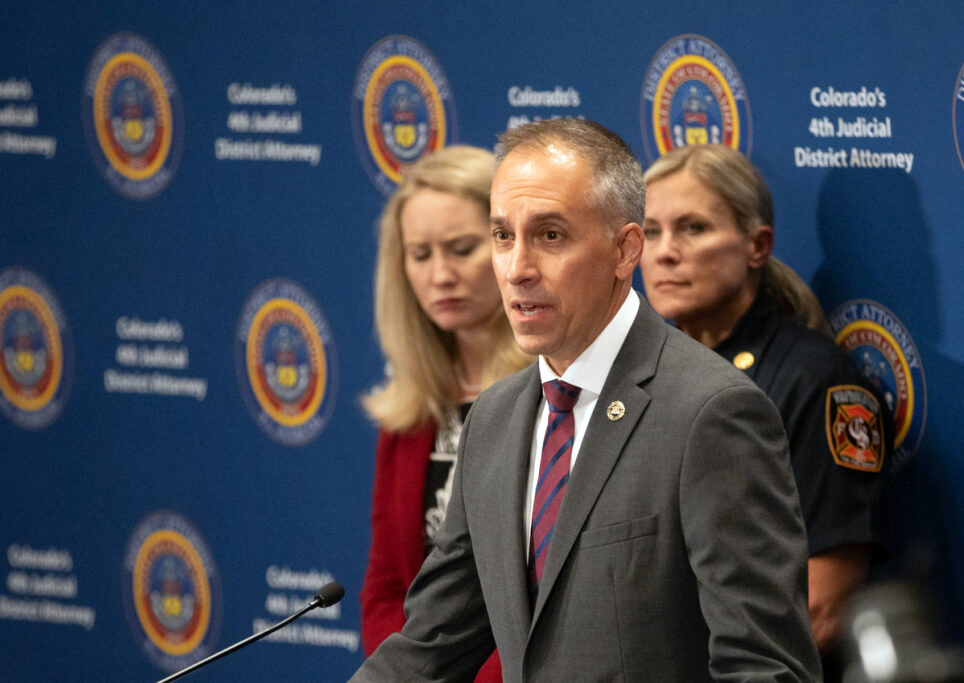
When the bureau called Michalek to Washington, D.C., in 2025, he did not want to go.
“It was tough to leave,” he says of the Denver field office. “But the institution needed me. Service before self.”
Today, he serves as executive director of human capital and enterprise risk, a jump in the bureau’s hierarchy that he compares to going from a one-star to a three-star assignment without the stop in between.
His portfolio covers HR, security, internal affairs, compliance and training across 38,000 employees worldwide, with operational authority over nearly a quarter of all FBI programs globally.
The scope places him at the center of how the bureau prioritizes risk, develops talent and sustains operational readiness at scale. The role integrates workforce strategy with operational readiness, aligning the agency’s workforce with mission execution.
“Working HR was not on my bucket list,” he says. But, he adds, “recruiting, retaining, developing and supporting the best people” excites him because “the people drive the mission. People are the potential energy of an organization. If you take care of them, they’re going to hit it out of the park.”
His focus has been on strengthening enterprise governance, accelerating workforce readiness and ensuring the bureau can operate effectively in increasingly complex threat environments.
He has pushed agency culture toward what he calls post-traumatic growth, building mental fitness infrastructure that treats the whole person rather than just operational capacity, drawing the frame of an Olympic athlete: Training is only part of it, and nutrition, sleep and mental health have to work together with everything else.
As the highest-ranking Air Force veteran in the bureau, Michalek is also shaping who comes next, focusing recruiting on veterans and service academy graduates as the threat landscape shifts toward cyber, artificial intelligence and counterintelligence.
He clearly sees the distinction between this role and every assignment that came before it.
“When you’re a junior officer, you’re keeping the train on the tracks, making sure the trains are running on time,” he says. “At this enterprise level, you’re laying down enough track for this train to keep moving forward.”
It is a shift from execution to architecture — designing systems that endure beyond any single leader or moment.
THE LONG BLUE LINE
For USAFA graduates considering the bureau, Michalek’s case is direct: The mission focus, the institutional culture, the weight of decisions that affect real lives — it all translates. Plus, the FBI offers what few civilian careers can: the sense of belonging to something larger than yourself with consequences that are both visible and real.
“I’m not only representing the Long Blue Line, but the Air Force as a whole,” he says. “It keeps me centered.”
It is a perspective shaped by decades of leading in high-consequence environments — and one that continues to inform how he approaches leadership at the enterprise level.
And for cadets still grinding, unable to see past the next inspection, Michalek offers the view from a quarter-century out, thinking back to that June morning in 1999 when his hat soared toward the Thunderbirds overhead and four years of pressure suddenly fell away behind him.
“There is no other time in your life where you will feel such a sense of accomplishment, confidence and pride,” he says. “The Air Force Academy fundamentally changed the trajectory of my life. You don’t see that when you are in the storm.”
The boomerang, it turns out, always comes back with interest. “Stay the course,” he says. “This will pay dividends the rest of your life.”
Long Blue Leadership: Resilence through crises
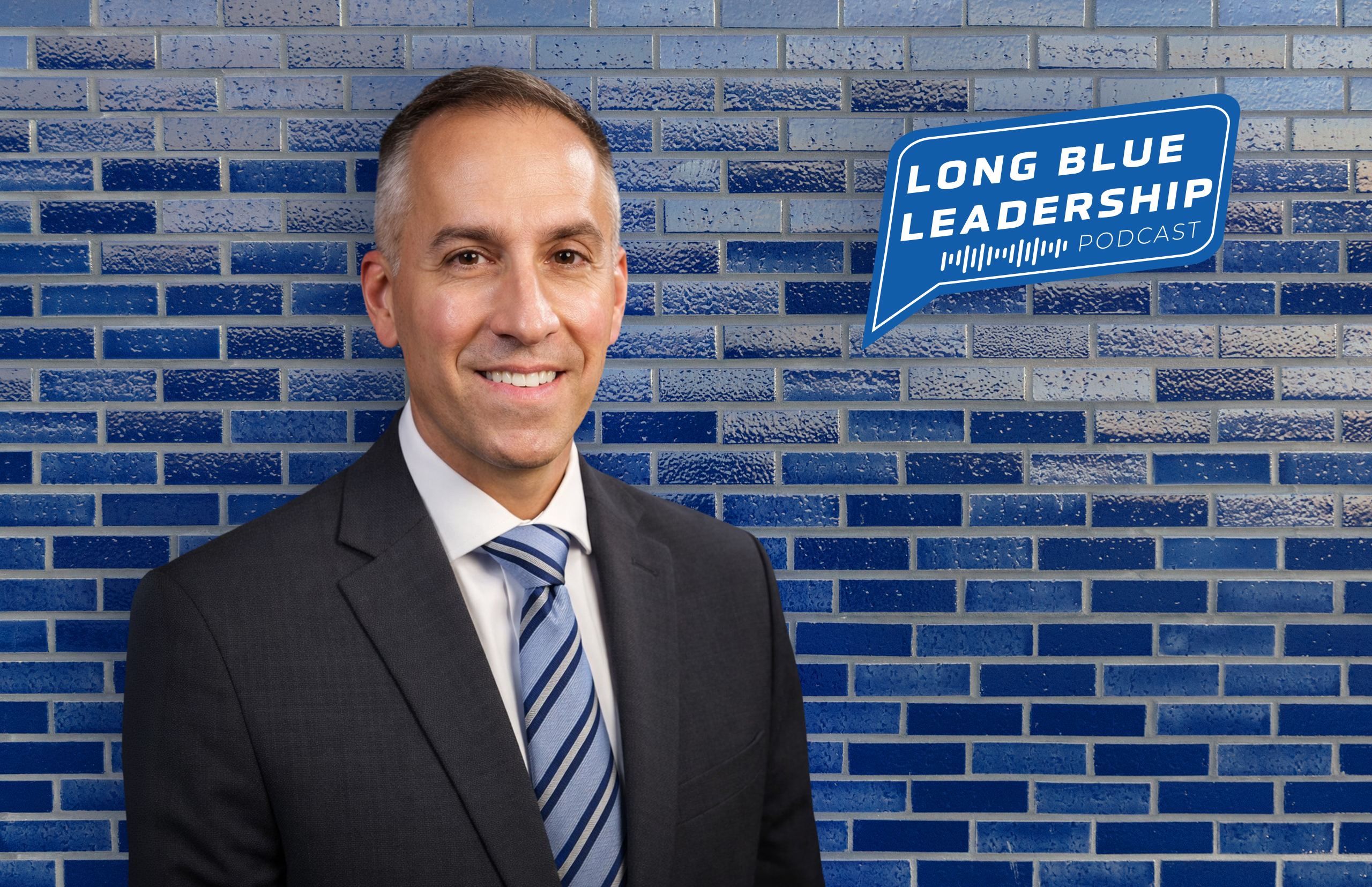
Be sure to check out the Long Blue Leadership podcast with Mark Michalek ’99.