
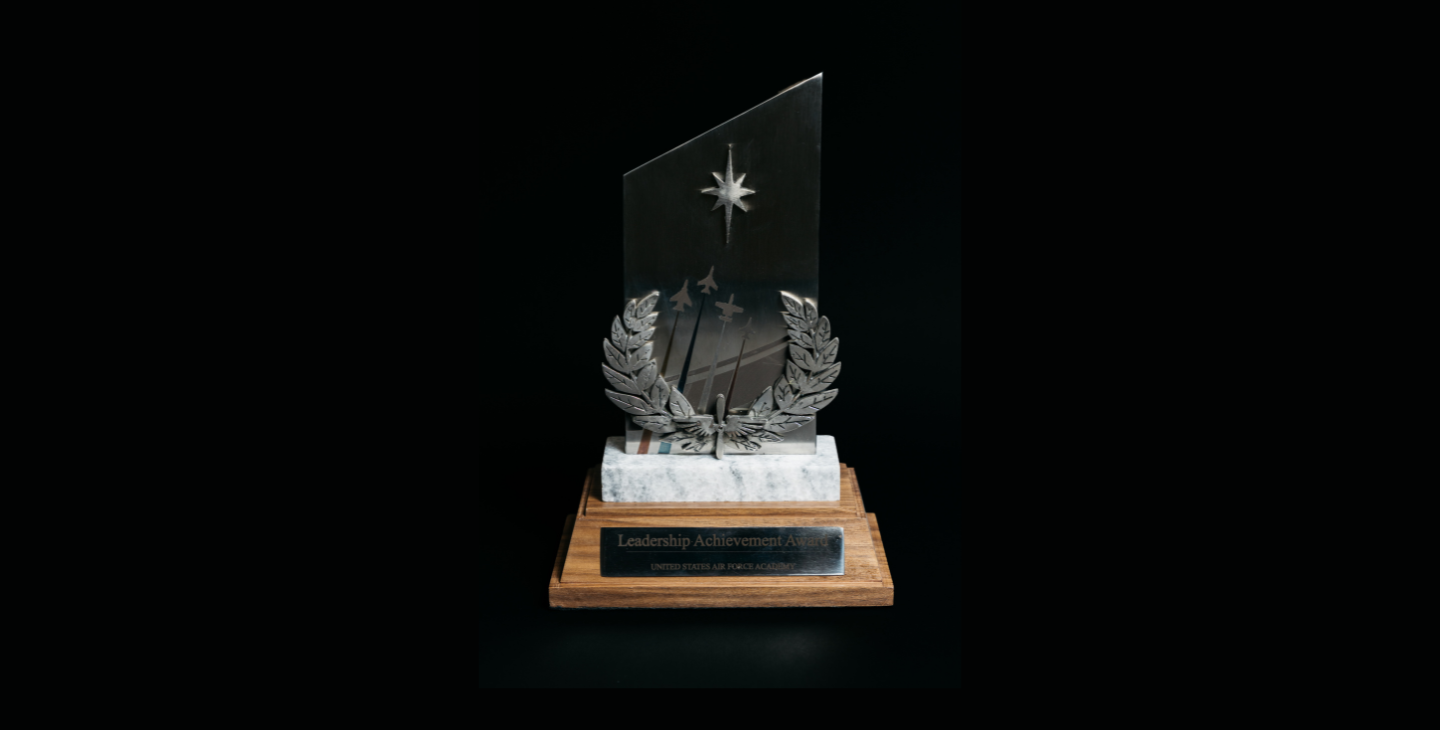
Checkpoints: Exemplifying Excellence - Leadership Achievement Award
A Pilot's inheritance: Combat aviator, trailblazer and keeper of aviation history
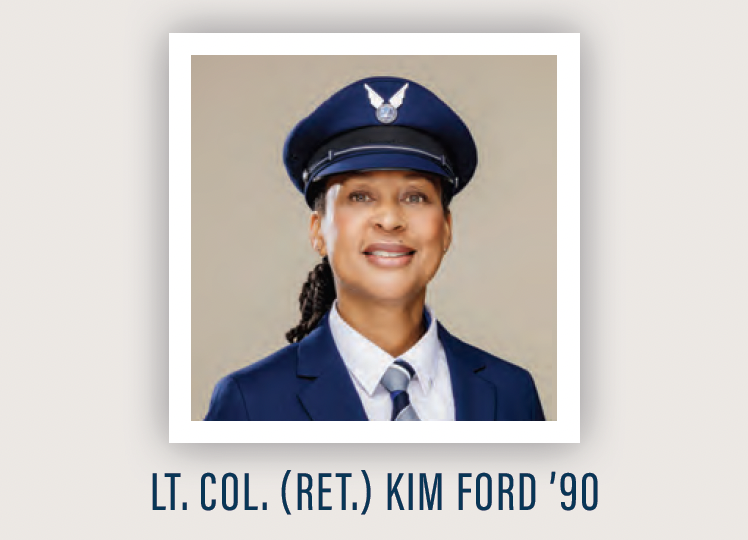
Lt. Col. (Ret.) Kim Ford ’90 grew up a few blocks from a small Seattle-area airfield, watching Cessnas come and go until the growing neighborhood forced it to close in 1983. She didn’t need a runway to fall in love with flight. She had a father who’d served as a Signal Corps officer in France, uncles who’d come up through ROTC, a grandfather who’d served as an airman in World War II, and a view of the Blue Angels screaming over Lake Washington during the multiweek Seafair summer festival.
“I loved aviation, I loved travel, and I really wanted to serve,” says Col. Ford, a 2025 Leadership Achievement Award recipient. “I was trying to figure out how to bring all those together.”
Her father had the answer: Go to a military academy, where the country would pay her to fly. The Leadership Achievement Award, which recognizes graduates who have reached a high level of professional accomplishment in military or civilian life while upholding the Academy’s standards of integrity and character, would one day reflect just how far that answer took her.
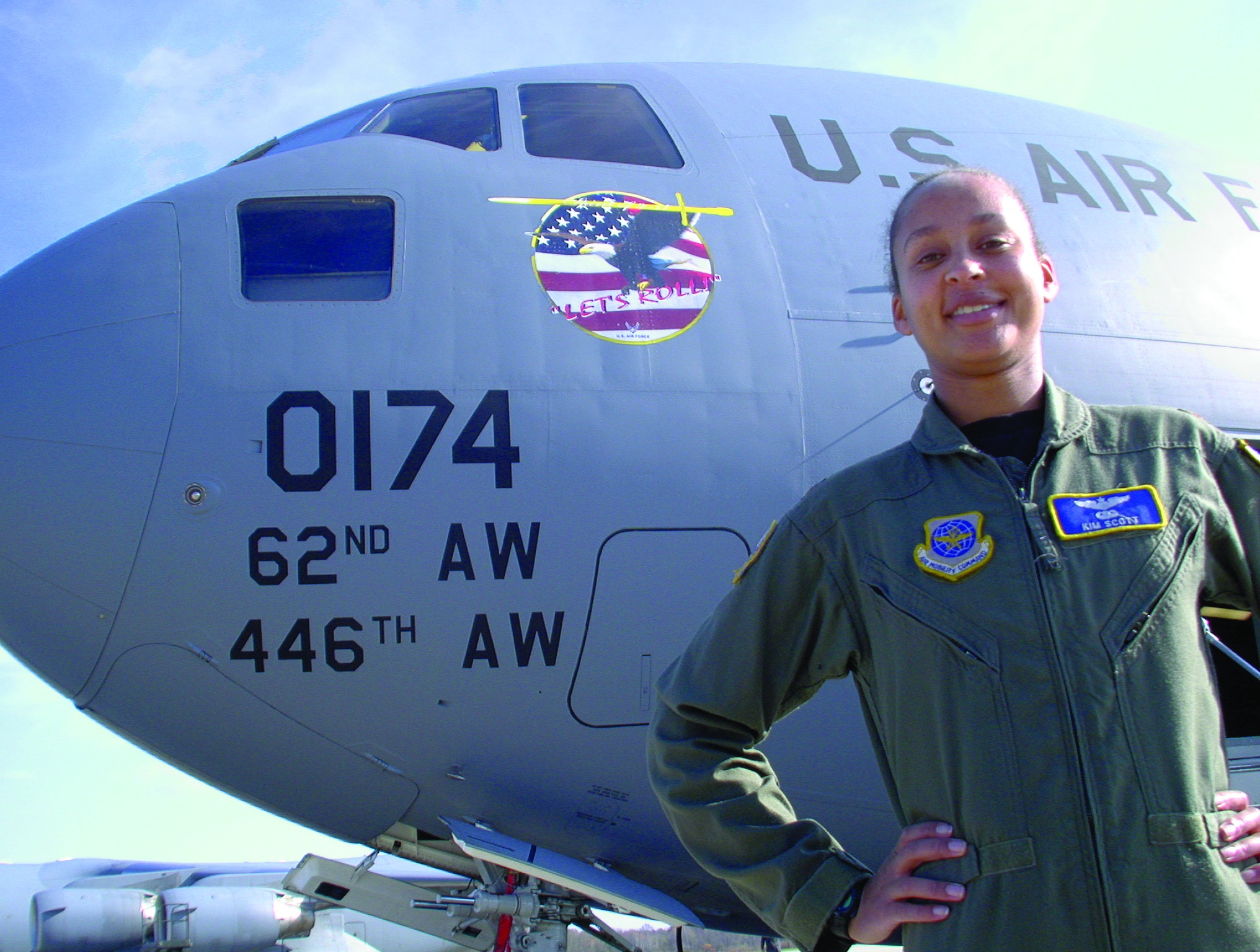
What followed was a 25-year career as a KC-135 and C-17 command pilot, instructor and mission commander who logged more than 11,000 flight hours across a dozen named combat operations, and then a second act spent ensuring the country never forgets who flew before her.

The Village that got her there
A single mentor didn’t pave Col. Ford’s path through the Academy. It was built by a community she still credits more than three decades later: fellow cadets, a Mitchell Hall janitor who took an interest in a homesick three-degree and an athletic trainer who nursed her through a firstie-year ankle injury that threatened to keep her out of pilot training.
The janitor took her to get a haircut and brought her home for dinner with his family.
The trainer wrapped her ankle every day after the varsity athletes cleared out, working through pain in an ice bath while talking her through leadership and persistence. “She really gave me that mentoring, time and support that I needed,” Col. Ford says.
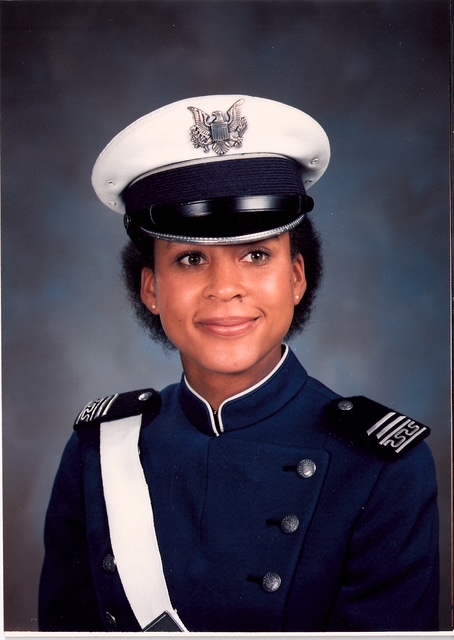
Then-cadet Ford passed her physical and earned her wings at Laughlin Air Force Base, Texas, her father pinning them on as her mother and siblings looked on.
A career forged post 9/11
Col. Ford built her career on the KC-135, refueling aircraft from Fairchild Air Force Base, Washington; McConnell Air Force Base, Kansas; and Grand Forks Air Force Base, North Dakota, before transitioning to the C-17 at McChord Air Force Base, Washington.
When the Sept. 11, 2001, terrorist attacks reshaped the Air Force’s mission overnight, her Reserve unit, the 446th Airlift Wing, found itself flying some of the heaviest mission loads of the early war years. “That was a moment when everybody was of the same mindset, uncertainty and concern for our country,” she says.
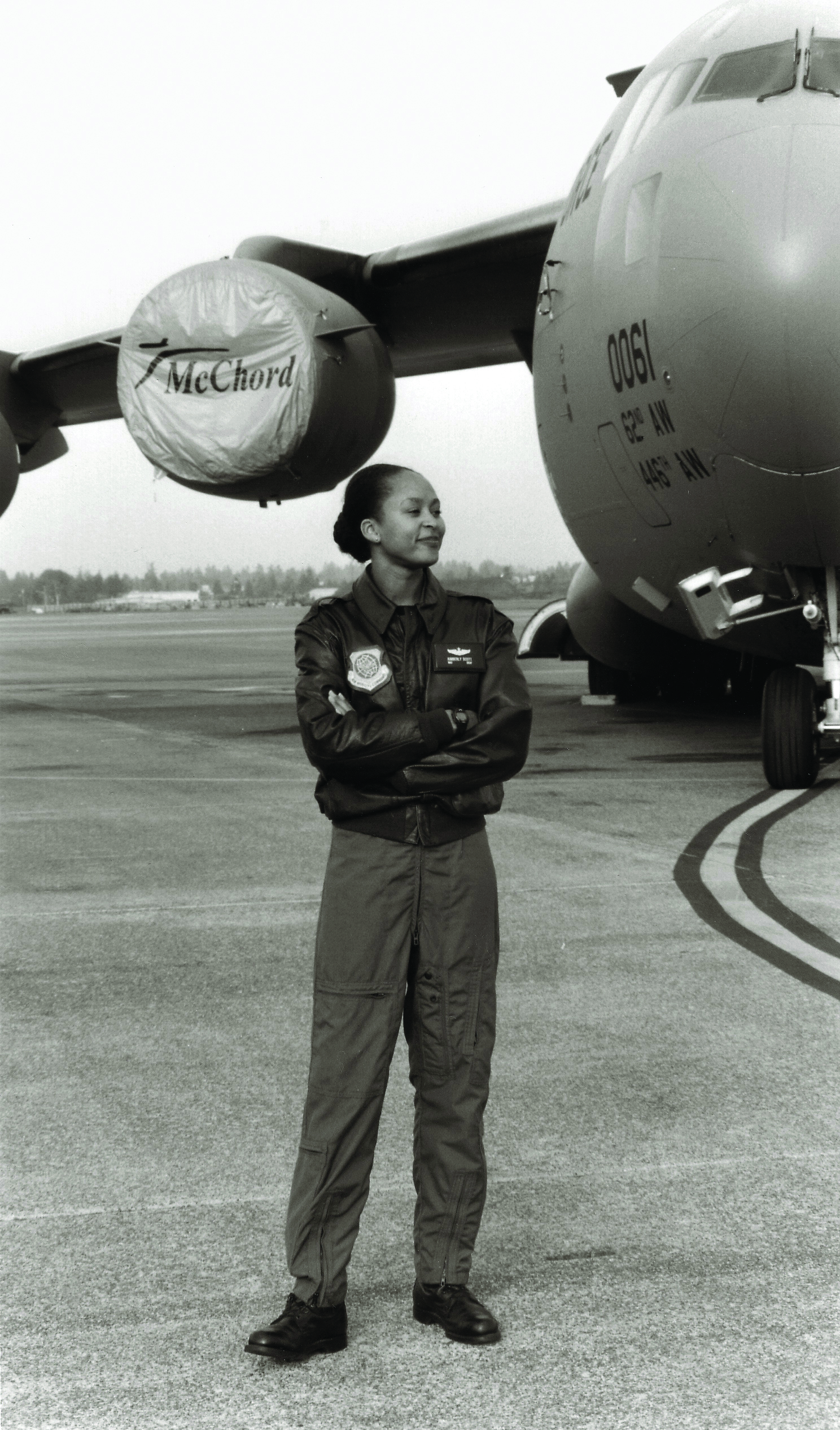
She flew under night-vision goggles into combat zones, moving people and cargo across more than a dozen named operations — work that eventually earned her a spot in the Air Mobility Command commander’s action group, supporting decisions for an enterprise of 134,000 airmen.
The shift from flight deck to command staff reframed her understanding of leadership. “It’s really from that tactical [view] to more of that big picture,” she says. She became a command briefer, memorizing a 35-minute briefing she delivered to members of Congress, military officials and community leaders.
One scenario tested her harder than any combat sortie: Flying a Kosovo air refueling mission with a green crew in a stacked nighttime formation over the Adriatic Sea, she discovered that her co-pilot didn’t understand the communications due to being new to intense combat support flying operations. The mission was canceled for unrelated reasons, but the lesson stuck. “I learned accountability, and that I am responsible for making sure that my team is ready to go,” she says.
Her crew spent the next five days chair flying every phase of the mission together. When the next opportunity came, they earned recognition as the deployment’s most improved crew. That experience crystallized what she believes about leading people. “I believe in working very hard, I believe in not giving up, I believe in being resilient, and I believe in extending grace to others,” Col. Ford says.
Carrying the legacy forward
Col. Ford’s parents raised her on stories of the Tuskegee Airmen and the Women Airforce Service Pilots, taking her to museums and pointing her toward newspaper clippings long before she ever wore a uniform.
After retiring, she turned that childhood reverence into action, joining the Sam Bruce Chapter of Tuskegee Airmen that meets at Seattle’s Museum of Flight, where she now serves as a trustee, and building relationships with surviving Tuskegee Airmen, including Lt. Col. (Ret.) Bill Holloman and Lt. Col. (Ret.) Ed Drummond.
That work led her to a Congressional Gold Medal ceremony correcting decades of delayed recognition. She served as an escort for WASP June Leckie, placing the medal around her neck on behalf of a grateful nation. “That was really one of the most emotional moments of my life,” Col. Ford says.
Leckie’s family told her afterward that their mother had never shared her stories so openly before. Col. Ford carries the weight of her own place in that history, too, flying combat missions and earning induction into the Organization of Black Aerospace Professionals Hall of Fame in 2025. She corresponded with Mildred Carter, a pilot who married Tuskegee Airman Lt. Col. (Ret.) Herbert Carter but was barred from flying combat herself. “I carry it carefully; I carry it with deep responsibility and reverence,” Col. Ford says. “I try to pass along some of that pride and legacy and reverence to the next generation.”
Still Flying
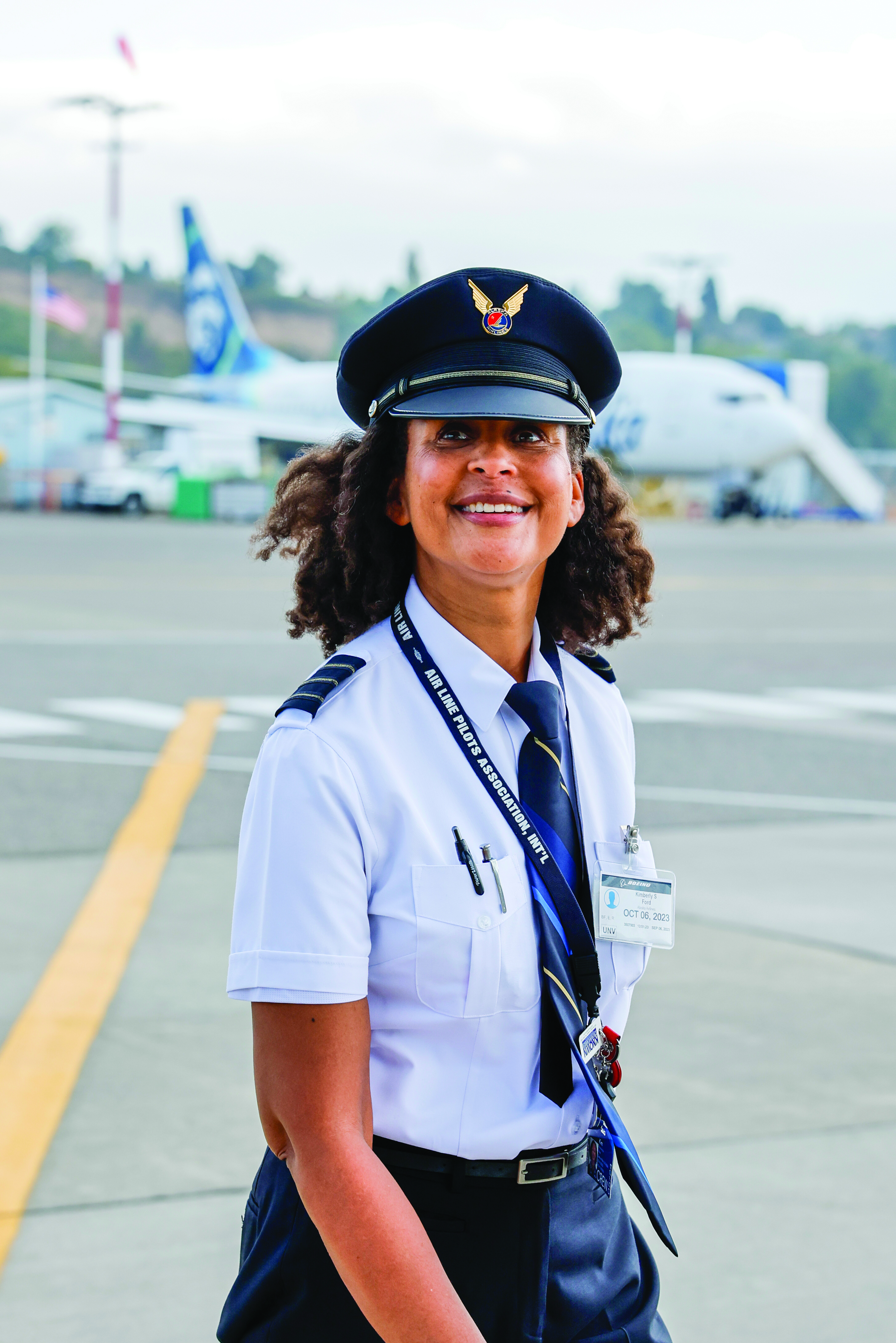
Col. Ford flies for Alaska Airlines today, recently adding Rome to her route map and hoping to qualify for the 787 before her career winds down.
She serves as a Falcon Foundation trustee and chairs the Michael P. Anderson Memorial Aerospace Program at the Museum of Flight.
Asked what sustains her, she returns to the word she’s carried since the Academy: purpose. “I think it’s important for people to see what is possible,” she says. “If people can see what is possible and be encouraged, that serves a very important purpose.”
She credits her parents above all others for instilling the belief that she could succeed and the resilience to keep showing up. Of the Leadership Achievement Award, she calls it a reflection of everyone who carried her there. “I’m very humbled and honored,” she says, adding, “I feel it really is a group accomplishment.”
The Strongest Survive: An intelligence career built on service, not spotlight
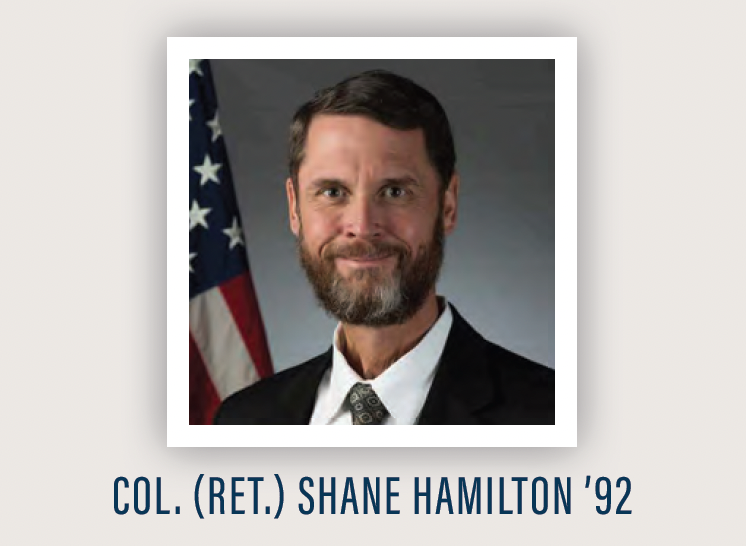
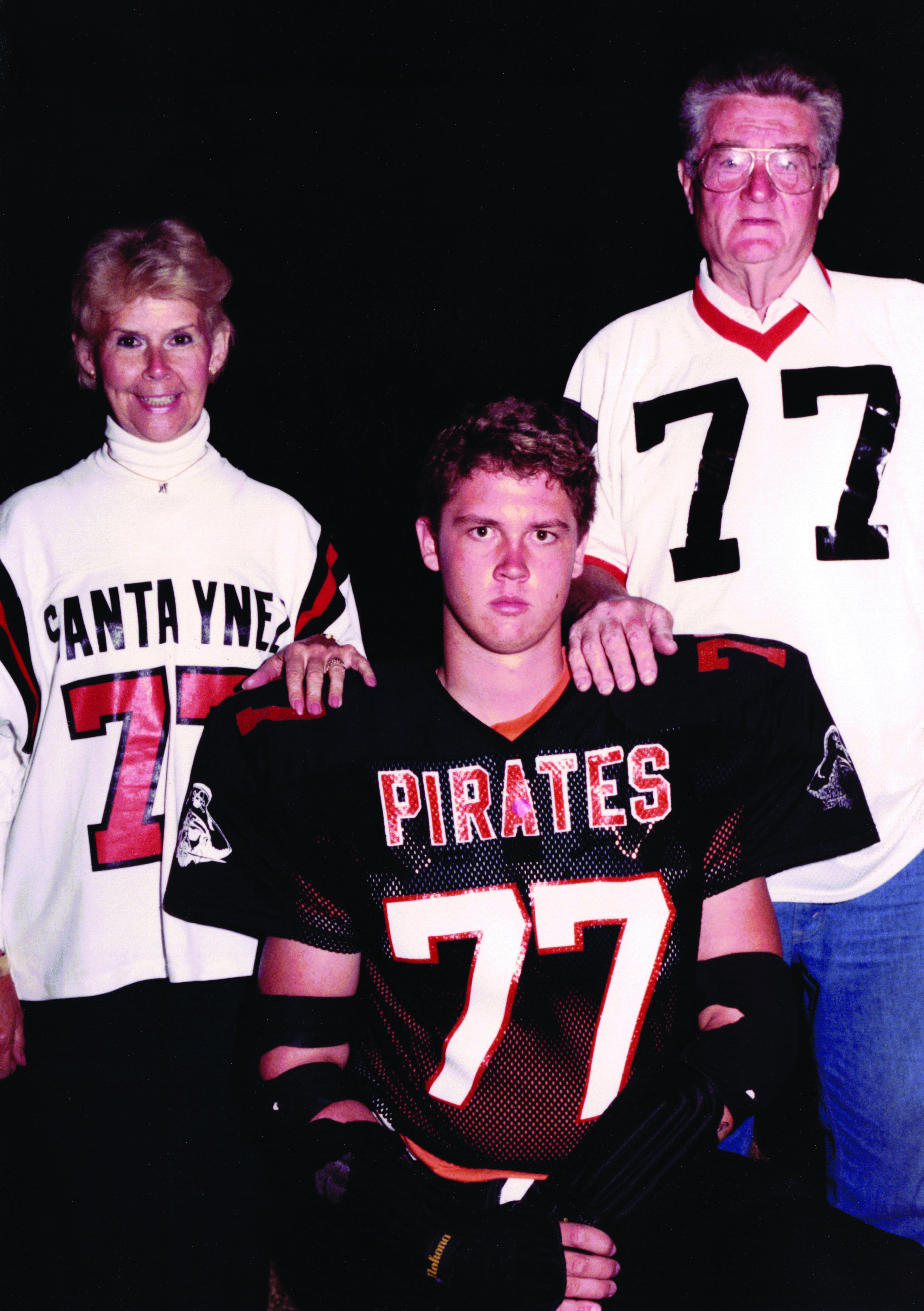
Col. (Ret.) Shane Hamilton ’92 sat in his family’s living room in a Notre Dame T-shirt, at the feet of a mother in a Notre Dame sweatshirt and a grandmother in a Notre Dame sweatshirt, watching a stranger pop a tape into the VHS player. Every man in his family dreamed of attending Notre Dame since his grandfather, the first college graduate among them, had earned All-America honors on the football team there decades earlier.
Col. Hamilton thought of himself as a decent (but not great) high school offensive tackle, and his coach had been fending off a persistent recruiter from a school Col. Hamilton had never heard of. “Coach, what’s the Air Force Academy?” he remembers asking.
Col. Hamilton, a 2025 recipient of the Leadership Achievement Award — which recognizes graduates who have reached a high level of professional accomplishment in military or civilian life while upholding the Academy’s standards of integrity and character — still remembers what Air Force head coach Fisher DeBerry told him after the five-minute recruiting tape ended.
Col. Hamilton said his family wanted him to attend Notre Dame. DeBerry told him that might be for the best, because only the strongest would survive, much less prosper, at the Air Force Academy. “I said, ‘Coach, you don’t think I’d make it at your school?’” Col. Hamilton recalls. “And he said, ‘Shane, that’s not what I said. What I said was only the strongest will survive, much less prosper.’ And I looked at him, [and] I said, ‘I’ll go to your school.’”
Col. Hamilton’s grandmother didn’t speak to him for two years. She came around eventually. What followed was a 35-year career spent at the intersection of intelligence, airpower and national security, much of it conducted in rooms most Americans will never know existed, in service of decisions most Americans will never know were made.
A mentor on the terrazzo
Col. Hamilton arrived at the Academy as a Division I athlete and jokes that it wasn’t his academics that got him in.
“I went to the Academy on an athletic scholarship, not academic, and my grades certainly showed it,” he says. The person who he says shaped him most wasn’t a professor or a coach. It was Master Sgt. Mike Baird, who ran the Academy’s Survival, Evasion, Resistance and Escape program.
Col. Hamilton kept returning to SERE summer after summer, eventually becoming group commander, the most senior cadet position in the program, to stay close to Baird. “He took time, even when I was a student, to really see me as an individual and try to help me on my leadership journey,”
Col. Hamilton says of Baird. “He taught me more about leadership than you can stack M5 sessions a mile high.” When other cadets studied in the library, Col. Hamilton studied inside Fairchild Hall’s SERE office, just to listen to Baird talk.
Finding a calling
Col. Hamilton graduated with little interest in the cockpit and no military lineage to point him anywhere else; his grandfather’s brief wartime service was the only uniform in the family before his own. His instructors steered him toward intelligence based on his interests and his dual degrees in political science and history. He listened, and from his first day in the career field, he knew he belonged.
“It was by the grace of God that I ended up in intelligence,” he says. “From Day 1 of being an intelligence officer, I was where I wanted to be.”
Early in his career, before the Air Force owned a single remotely piloted aircraft, Col. Hamilton authored the service’s foundational strategy for employing one. That guidance helped shape two decades of operations following the Sept. 11, 2001, terrorist attacks on the nation.
During the early days of the war in Afghanistan, he developed targets for 478 highly classified, presidentially directed missions — work that earned him the National Intelligence Certificate of Distinction from the director of Central Intelligence.
He went on to serve as senior analyst during the peak of North Korean provocations, lead threat assessments for U.S. operations in Libya, and prepare presidential daily briefings on China, Iran and the Gulf Cooperation Council. He briefed Congress on a foreign information operations threat — testimony that helped guide a $50 billion shift in national security policy.
He transformed the National Air and Space Intelligence Center’s analysis hub into the top-ranked unit among 18 squadrons.
As associate director of intelligence at Air Combat Command, Col. Hamilton directed a $7.5 billion intelligence, surveillance and reconnaissance enterprise spanning more than 15,000 airmen across six major commands. He implemented a sensor-to-shooter kill chain automation program now operational across four combatant commands, guided early artificial intelligence integration into satellite imagery analysis that cut human processing timelines by up to 80%, and secured $150 million to automate long-range targeting capabilities that had stalled for decades.
Leading from the bottom
Col. Hamilton says his leadership philosophy traces back to an Irish Catholic upbringing that drilled into him a single idea: Any strength he had wasn’t his to use for his own success. “I don’t believe that the best leaders sit at the top,” he explains. “I believe that the best leaders sit at the bottom, and that the true privilege of leadership is the responsibility to care for the folks you work with and to take care of them on their journey.”
The hardest lessons came from failure, not success, he says, and from watching how people respond when things go wrong. “You can actually learn more about leadership from bad leaders than from good ones,” Col. Hamilton says. “When you fail and you have to pick yourself up, that’s when you really see who a person is.”
Much of his work, by design, will never be publicly told. What stays with him isn’t the budget lines or the classified briefings. It’s the airmen he helped get into schools, into commissioning programs, into the assignments and awards that built their careers. “That’s what truly speaks to me,” he says. “It’s the role that I was able to have in helping them that I’m most proud of.”
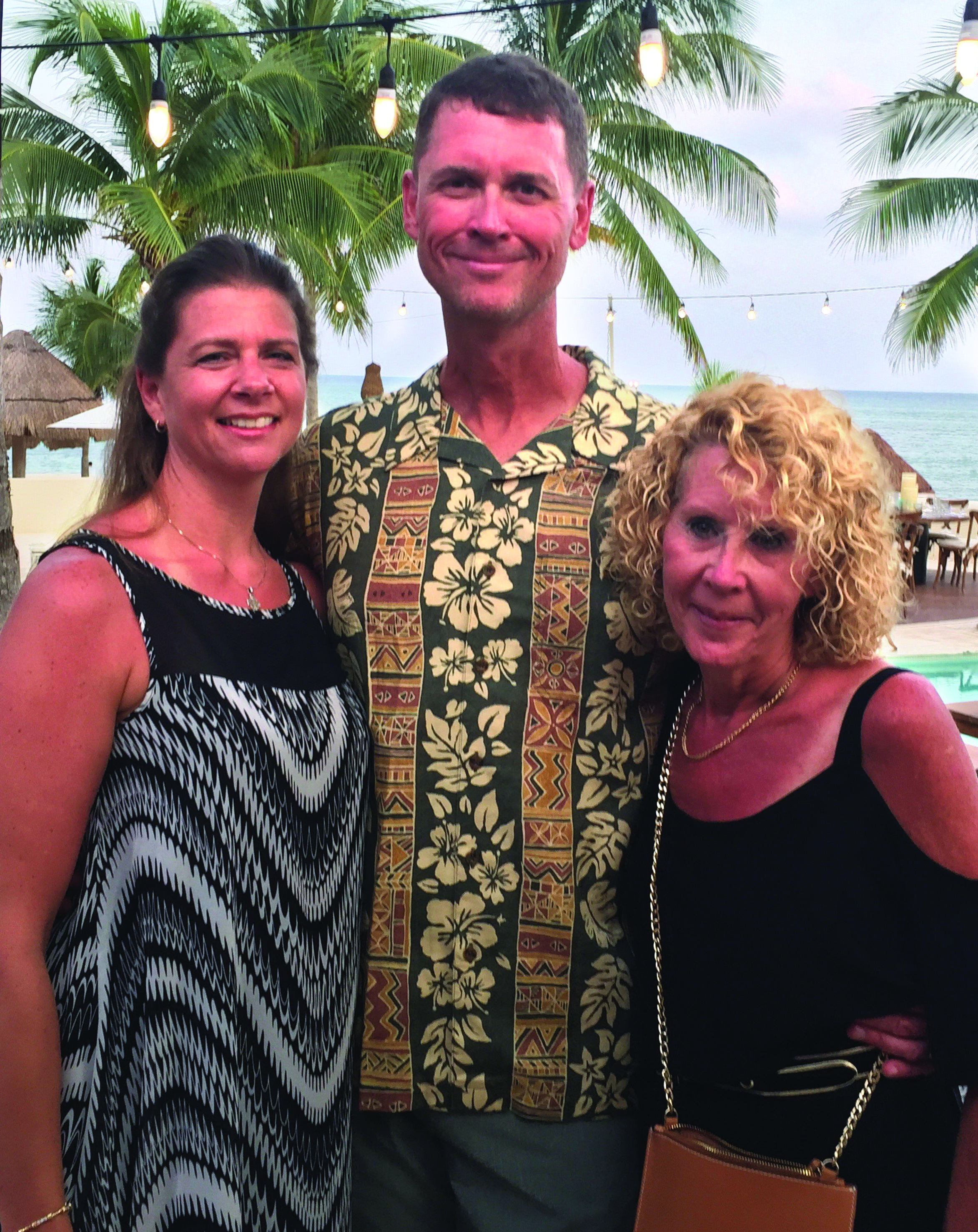
He credits his wife and his mother as the two people most responsible for shaping who he became — a debt he says he’s still working to repay. Of the Leadership Achievement Award, Col. Hamilton, who calls himself a poor cadet by any measure, admits to a flicker of imposter syndrome even now. Col. Hamilton with his wife, Denise, and mother, Patti Hamilton. “I’ve tried to do my best every day and work hard,” he says. “It means the world to me that people who I know took the time to nominate me for this award. It’s truly humbling.”
An island of her own: From cadet advocate to pioneer in military justice reform
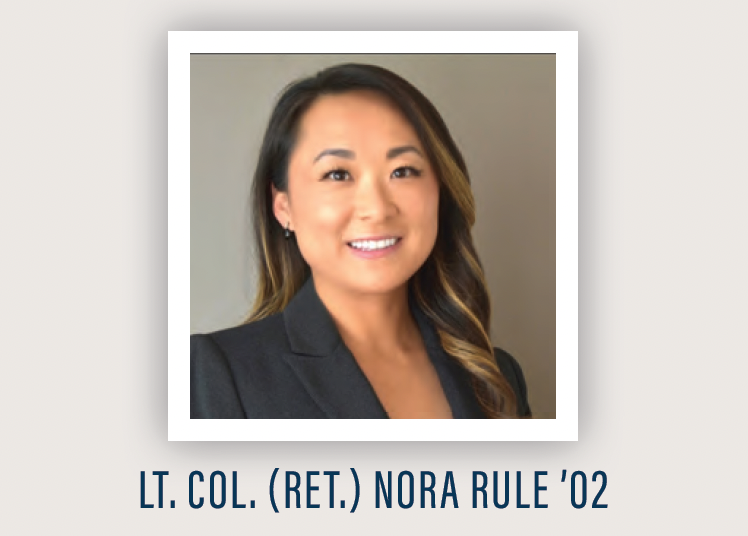
Lt. Col. (Ret.) Nora Rule ’02 was just three years old when her father decided his daughters would have more opportunity in the United States than in South Korea, turning what was supposed to be a brief diplomatic posting into a permanent move. The family stayed, and Col. Rule grew up with her father’s military service in the Republic of Korea Army and his subsequent work with the U.S. Department of Defense as a constant, formative presence — long before she understood it as the seed of her own path.
That interest sharpened into purpose because of one woman: Col. (Ret.) Paula Gould, Col. Rule’s Academy liaison officer, who opened her own military family to a curious teenager and showed her what service looked like day to day. “She really connected with and invested in me,” Col. Rule says of Col. Gould. “I could see how her love of service and the Air Force was real and palpable.”
Col. Rule is a 2025 Leadership Achievement Award recipient, an honor reserved for U.S. Air Force Academy graduates who have reached a high level of professional accomplishment in military or civilian life, while upholding the Academy’s standards of integrity and character.

A LABORATORY FOR LEADERSHIP
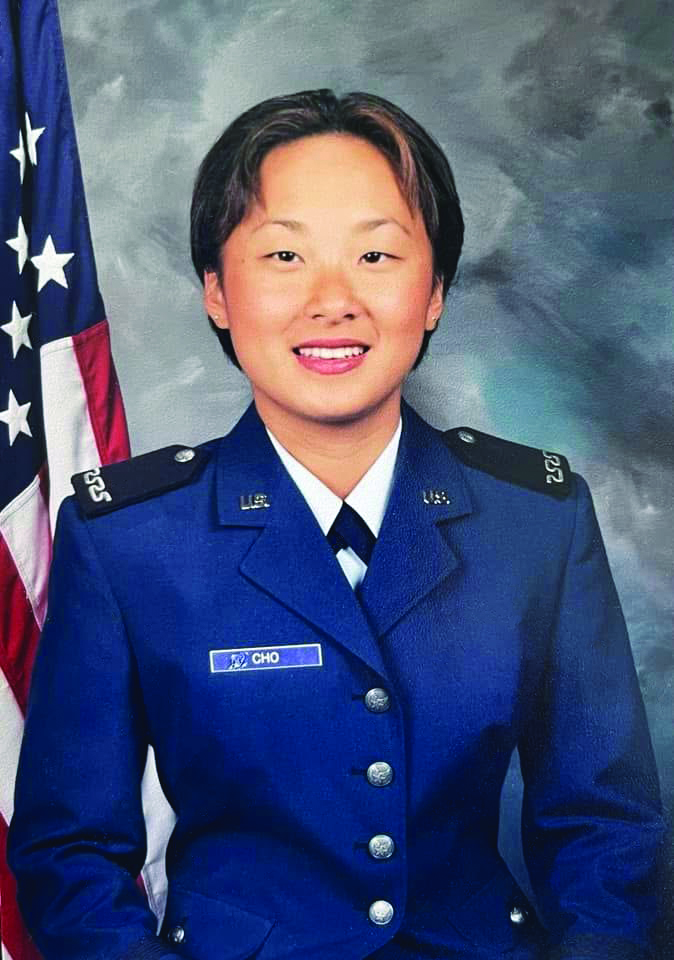
Col. Rule arrived at the Academy in 1998, nearly two decades after the first class of women graduated. She was soon appointed Cadet Wing human relations officer, advising on sexual harassment claims. Climate assessments from that era underscored how recently conditions had changed at the Academy.
Just a few years before Rule arrived, women had been barred from squadron assembly rooms and from intramural competition. “There are these fearless women who came before me who paved the way. I am awestruck at how courageous they were,” Col. Rule says. “If they had just gone with the flow and didn’t fight for every inch, I wouldn’t have had the positive and incredible experience that I did at the Academy.”
She captained the women’s lacrosse team through a historic season, leading the program to its first national championship game appearance. Looking back on her years as a cadet, she describes the Academy as a place to study every style modeled by the upperclassmen who trained her and then test her own limits.
“You don’t fully appreciate it as a cadet, but the Academy is the ultimate leadership laboratory,” she says. “It’s the place to try different things, watch your classmates figure it out alongside you, and learn exactly what works and what doesn’t. Everyone there should be experimenting, because it is absolutely the safest place to fail.”
On an island
Col. Rule initially commissioned as an acquisitions officer before earning a highly competitive slot to attend law school, joining the JAG Corps, where she was ultimately recognized by the Judge Advocate General as one of the top five attorneys in the corps.
She deployed with the Army in support of Operation Enduring Freedom and later as a staff judge advocate during Operation New Dawn. But she says the case that defined her career, and tested her most, came as a founding leader in the then-Department of Defense’s Special Victims’ Counsel program.
Col. Rule became the first SVC to represent a victim and testify before the Senate Armed Services Committee, capping off a grueling two-year period of intense representation that challenged decades of Feres Doctrine precedent. “To do the job right as a victim’s counsel, you need to be free of any pressure from the chain of command,” Col. Rule says.
“At the time, with all the media scrutiny and high stakes, it was daunting and truly felt like I was on an island. But looking back, being on that island wasn’t because I was abandoned — it was because they trusted me.
The Air Force spent years training me, and when it counted most, they backed off and gave me the autonomy to execute.” She credits then-Judge Advocate General Lt. Gen. Christopher Burne for protecting that space during this time, even as pressure mounted. “General Burne modeled the exact leadership you want in critical moments,” she says. The historic SASC hearing was just the beginning of her impact.
Col. Rule’s groundbreaking work propelled her to a seat on the DoD Sexual Assault Accountability Task Force, where she used her frontline experience to reshape how military command approaches sexual assault cases across all branches.
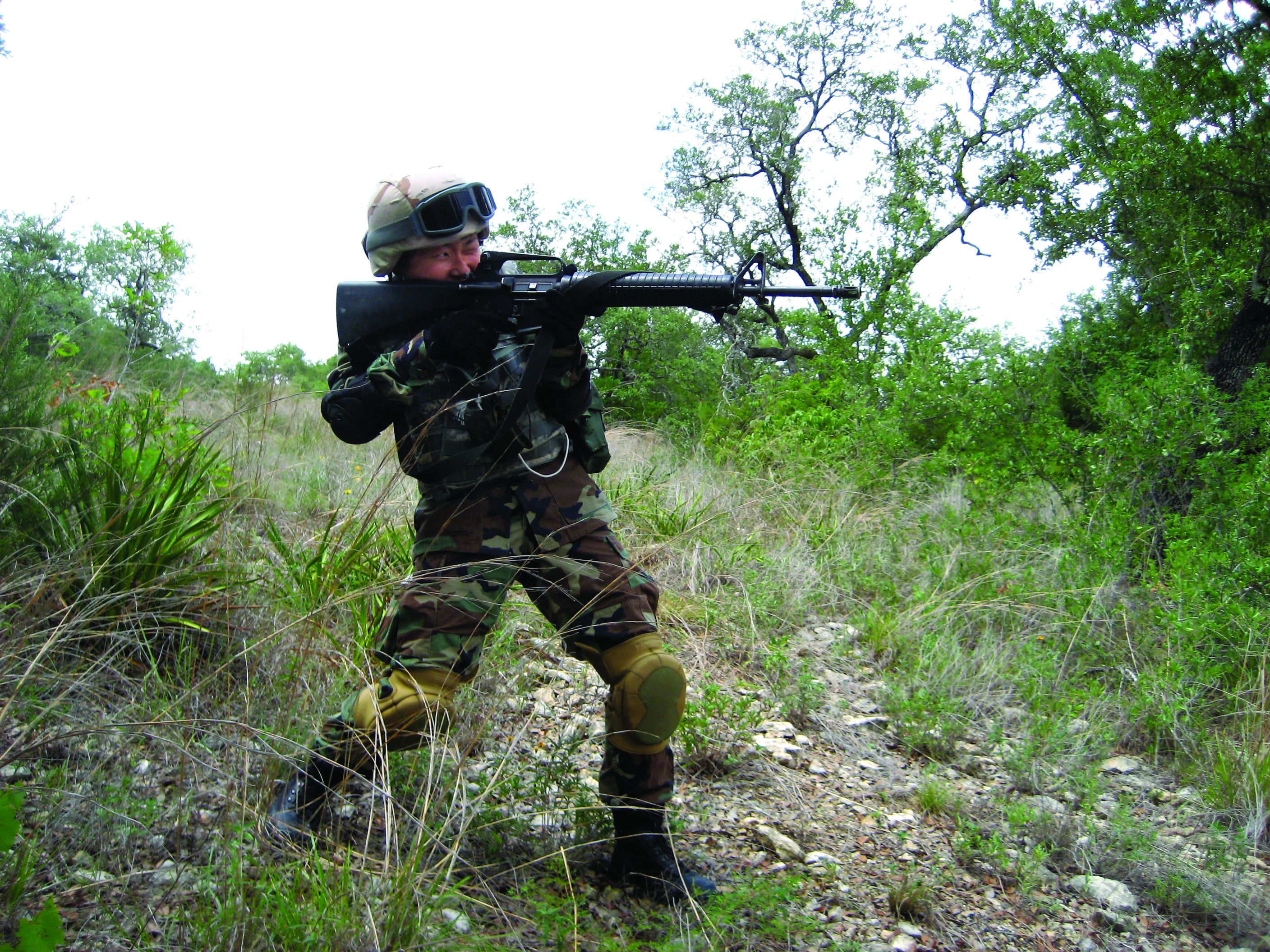
Taking care of people
Col. Rule says her approach to leadership traces back to her first JAG assignment at McConnell Air Force Base, Kansas, under her deputy SJA, Maj. Jack Hopkins. “At the time, I honestly thought he was being annoying, forcing me to rewrite my own OPR bullets over and over,” Col. Rule laughs. “I didn’t realize he was actually teaching me the skills required to be an effective AF leader. You have to know how to build a great record to get promoted into senior command. But once you are in the chair, those exact same skills are what give you the leverage to truly lift up your people.”
It sparked a mantra she has passed down to her own teams ever since: “To take care of others, you must first know how to take care of your own career.” She ran with that exact playbook years later when overseeing 16 regional offices across the East Coast. Leading more than 80 attorneys and paralegals, Col. Rule put those precise bullet-writing skills to work, ultimately helping multiple subordinates secure prestigious awards and advance.
“I wasn’t just their boss,” she says. “I was directly responsible for their professional growth.” Col. Rule brings that same strategic, mission-driven mindset to the private sector as vice president and associate general counsel at Amentum, drawing directly on her decades of experience advising military commanders on high-stakes operations. “A great lawyer isn’t just someone who stands on the sidelines telling you ‘yes’ or ‘no’ or reciting the law,” Col. Rule says.
“Advising commanders taught me that legal must be an integral part of the solution. That is the exact value I try to bring to the corporate world — embedding myself into the business to help solve the problem and drive results. That mindset seems to be what decision-makers appreciate about my approach the most.”
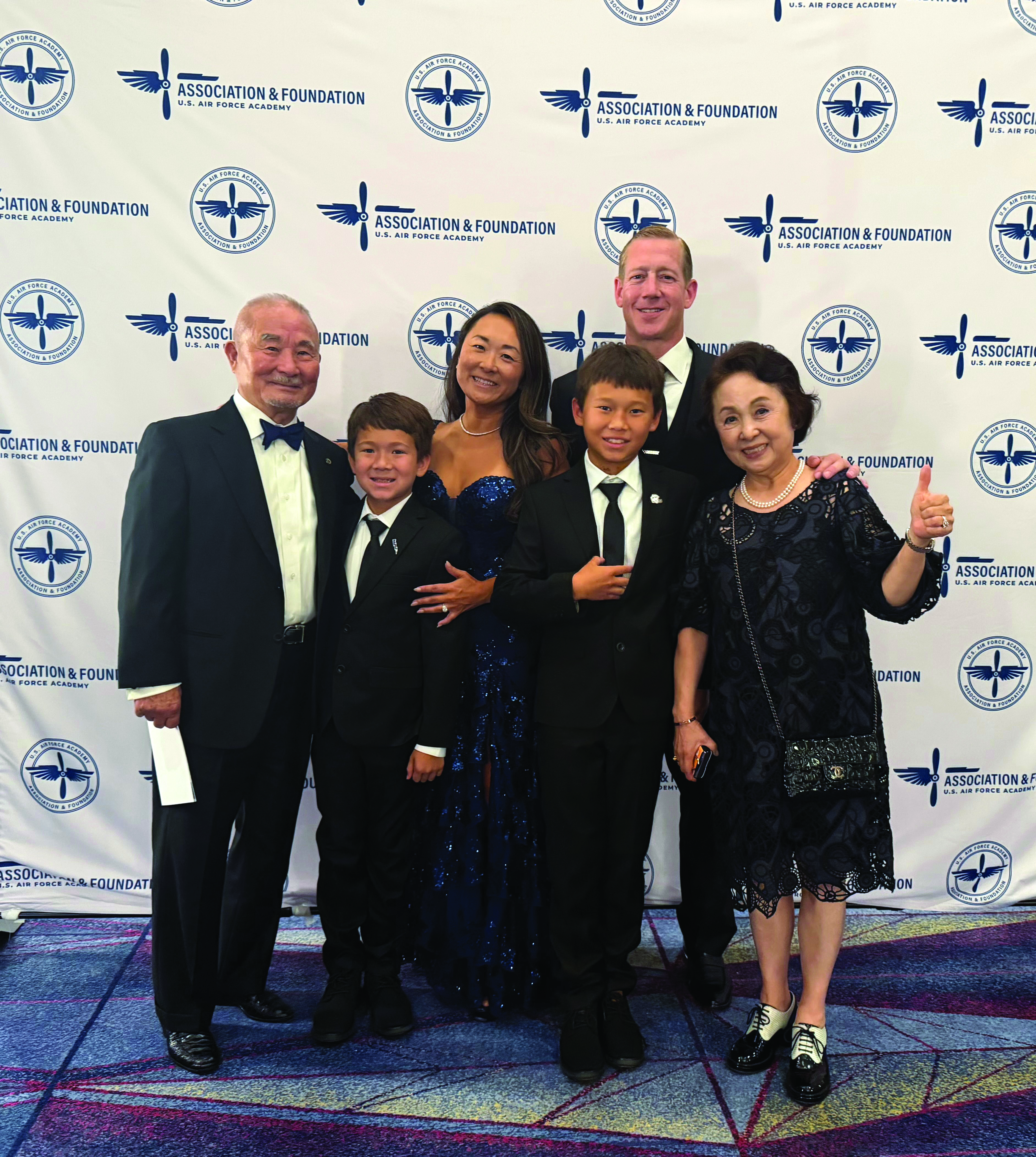
Beyond her corporate role, Col. Rule dedicates her time to shaping the future of her community. She is the vice chair of the board of trustees at Hampton Roads Academy and a board member for Freekind, a Virginia-based nonprofit combating human trafficking.
She and her husband, Lt. Col. (Ret.) Andy Rule ’02, a former F-22 pilot, also evaluate service academy nominations for U.S. Sen. Tim Kaine and U.S. Rep. Bobby Scott, viewing it as a vital way to open doors for the next generation of leaders.
When reflecting on the Leadership Achievement Award, Col. Rule’s thoughts immediately turn to her peers. She shares the honor first with her classmates. “I am incredibly proud to have graduated from the U.S. Air Force Academy, and I’m deeply honored by this recognition,” she says. “I am grateful for the lifelong friends who walked that path with me.