

Checkpoints: Algorithms at Altitude
How Academy grads are shaping the AI revolution
Five U.S. Air Force Academy graduates — among many — now work at the leading edge of artificial intelligence, applying military training to technology that’s reshaping how organizations operate.
Their missions vary: Kate Zimmerman ’12 leads teams at Amazon Web Services, developing AI for government agencies. Joel Neeb ’99 transforms customer communications at a cloud platform. Hassan Bin Rizwan ’02 automates business workflows from Dallas to Pakistan. Christian Sorensen ’97 deploys AI-powered cybersecurity systems. Peyton Cooper ’19 bridges commercial and classified space operations.
While all are in different environments, their philosophies remain consistent.
“We’re not in the Information Age anymore,” says Neeb, a Stage 4 cancer survivor who once led 300 senior combat pilots through 3,000-plus missions. “We’ve entered the Insight Age, where AI helps us extract signal from noise and turn data into decisions.”
In corporate data centers, Neeb’s systems analyze thousands of customer conversations simultaneously, while Zimmerman’s algorithms identify vessels by unique radio signatures in milliseconds.
Across continents, their fellow graduates deploy AI that never sleeps, never stops learning, and amplifies human capability while still requiring human discernment and judgment.

FROM ASSEMBLY LINES TO RAISING CHILDREN

The transformation Neeb champions at 8x8 — a cloud communications platform providing voice, video, chat and contact center solutions to businesses — reflects a fundamental shift in how organizations must adapt to survive. After tactically leading 300 senior combat pilots and overseeing 3,000-plus missions as chief instructor pilot at the Air Education and Training Command center, he brings military operational experience to corporate transformation.
“In the Air Force, it was always about the mission,” Neeb explains. “We need that same cross-functional alignment in business. We’re moving from assemblyline thinking, where everyone guards their silo, to something more like raising a child, where everyone drops everything when the mission needs it.”
In traditional business models, he explains, workers stand at their stations like assembly-line operators, focused solely on their specific task. This siloed mentality, he argues, can’t survive in the Insight Age.
“When you’re raising a child, you may have functionally focused roles: teacher, coach, parent, grandparent. But if the kid doesn’t show up to soccer practice, the teacher doesn’t say, ‘Well, that’s not my fault.’ We all drop everything,” Neeb says. His battle with Stage 4 cancer, which came with just a 15% five-year survival rate and an 18-month life expectancy, influenced his leadership philosophy in unexpected ways. “The biggest surprise for me with cancer wasn’t that I might die in 18 months, although that was a nightmare,” he reflects. “It was the fact that I was going to die at all. I know that might sound not very intelligent, but I was faced with my mortality in a very concrete way.” During treatment, Neeb launched CureCare to provide chemotherapy transportation for patients living in poverty.
He also started a program at Randolph Air Force Base, Texas, that helped 15,000 at-risk students, improving graduation rates from 35% to 60%. “I made deals with God, like most people do when they get cancer,” Neeb admits. “Then God called my bluff and said, ‘All right, you’re better. Let’s see what you do.’ So I did the unthinkable. I left the military at 15 years, five years away from retirement.”
Now leading AI transformation at 8x8, Neeb has overseen a 70% year-over-year increase in customer contracts and a 150% surge in AI-powered interactions. Every Tuesday morning, all 2,300 employees gather virtually for “Raise Your AI IQ” sessions, where team members share practical applications. “Someone will share about how they used AI to successfully combat a tax rate increase for their house,” Neeb explains. “Someone else will say, ‘My father passed away this past year. He never met his grandson, and I used AI to create a picture and video of them together that we played at his funeral.’ We do this because we want to make it accessible to everyone.”
A Massachusetts Institute of Technology study found that 95% of AI initiatives yield no business impact, but 8x8’s approach of culture before technology has driven measurable success. “Companies flip a switch on AI and hope for perfect outcomes,” Neeb observes. “They don’t fully understand how to deploy it from a cultural perspective. It’s not the technology, it’s the culture that has to precede the technology.”
BRIDGING WORLDS FROM CYBER TO SPACE
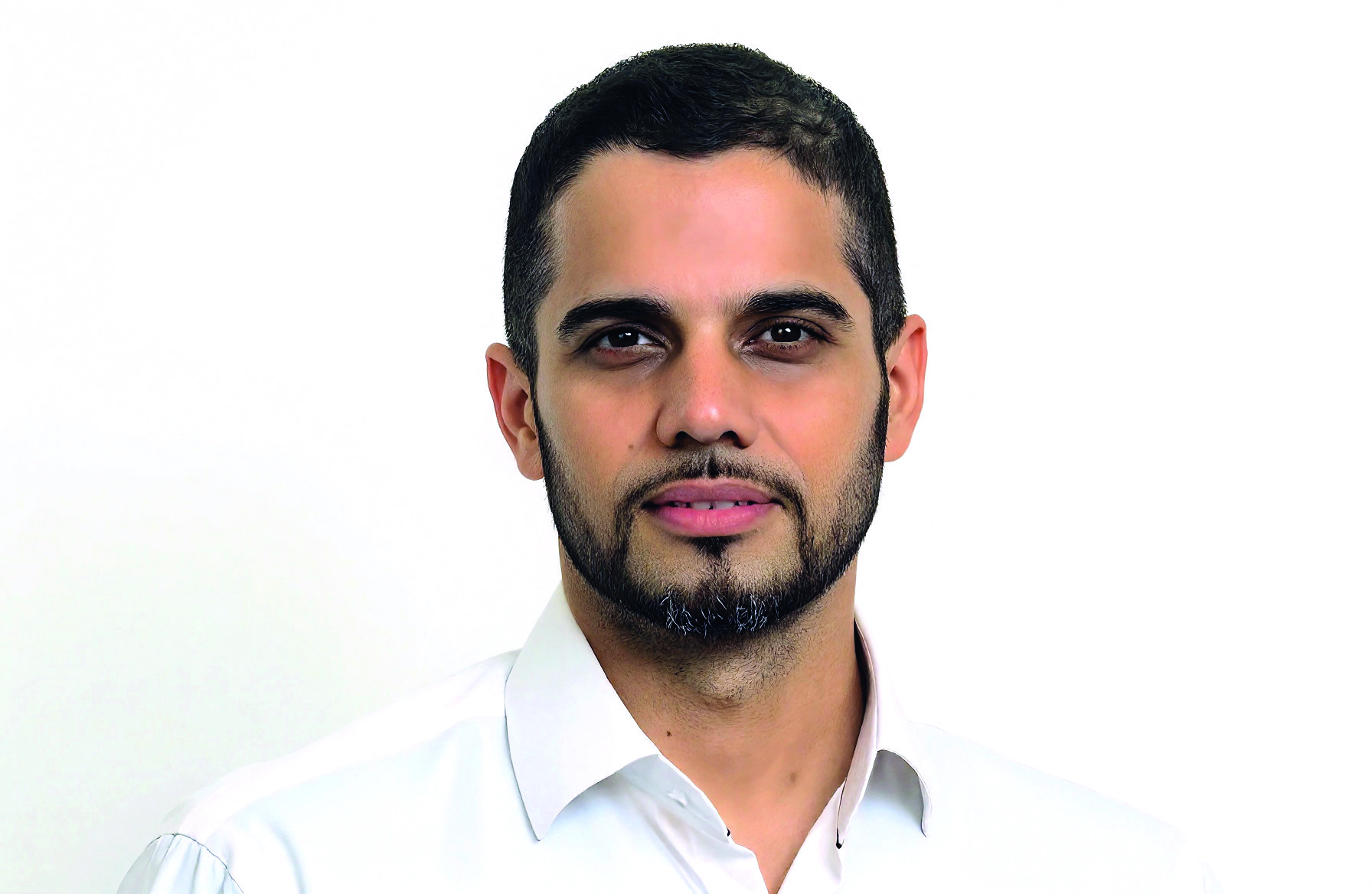
Rizwan builds bridges between emerging markets and AI applications, helping small businesses across multiple continents automate workflows.
The international cadet who arrived at the Academy in 1998 as his nation conducted nuclear tests now leads Prymus Consulting, helping small businesses across multiple continents automate workflows.
“I landed on June 25, just days before inprocessing,” Rizwan recalls. “When Pakistan conducted nuclear tests in May 1998, there was dead silence from the U.S. for weeks. I was neither here nor there. I had already out-processed from the Pakistan Air Force Academy but wasn’t sure if I could come to USAFA.”
During 12 years of service in the Pakistan Air Force, Rizwan worked as a radar operations officer and avionics maintenance engineer. He contributed to the JF-17 fighter program jointly developed by Pakistan and China, gaining experience integrating technologies from both Western allies and Chinese partners. After transitioning from military service in 2015, Rizwan founded SABAQ (meaning “lesson” in Urdu), an education technology company addressing Pakistan’s educational challenges.
“We reached more than 200,000 students across Pakistan and hundreds of schools,” he says. “Five hundred of those schools were in areas with no internet and no IT infrastructure. We preloaded 7-inch Android tablets with hundreds of videos and took them to the field.”
At Prymus Consulting, Rizwan applies AI to solve business challenges across sectors. His team recently built a “budget AI” that automates financial planning by pulling historical data, identifying expense categories and building forecasting frameworks. The system reduces human intervention by 80%.
“AI never sleeps,” Rizwan notes. “If you think of it as a long-term employee whose cost marginally reduces year over year, who gains experience, and who will never resign, that’s a powerful asset for small businesses.” His purpose-over-profit philosophy sometimes works against immediate commercial interests.
“A lot of times, potential customers say, ‘This is what we want, and that’s how we want AI implemented.’ If we believe that won’t be a good, long-term sustainable solution, we advise against it. I’ve had several meetings where I said what I felt was right for the client and didn’t hear back from them.”
Rizwan recently joined the NextGen Advisory Council, working with fellow council members and U.S. Air Force Academy Association & Foundation staff to strategize and execute ways to increase engagement among younger generations of USAFA graduates.
THE FINAL FRONTIER GOES DIGITAL
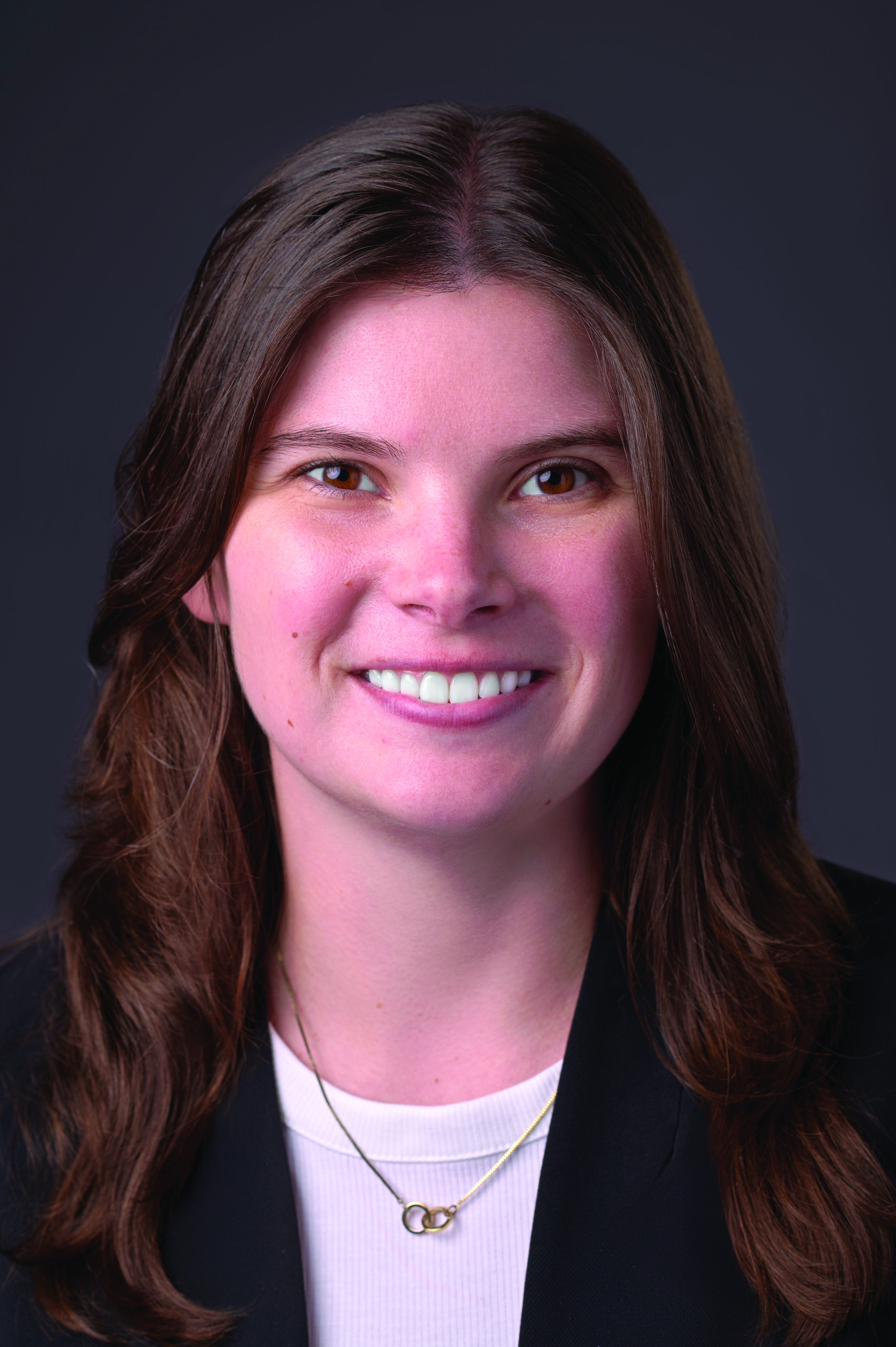
Cooper transitioned from the U.S. Space Force to the commercial sector with hard-won insights about implementing AI in classified environments. The former mission director who worked on the X-37B Orbital Test Vehicle, a reusable spacecraft capable of staying in orbit for years conducting classified experiments, sees both enormous potential and significant obstacles in military AI adoption.
“Space operations is one of the best-use cases for AI, particularly in the Space Force,” Cooper explains. “The sheer amount of data coming down from space is enormous. It’s far too much for any team or person to go through in a timely manner.”
During her time at the U.S. Air Force Test Pilot School’s Space Test Course, Cooper gained unique insights into both military space operations and industry capabilities. The program included tours across America’s space industry, providing exposure to commercial approaches. “We got to work with Planet Labs in one of our case studies and run experiments utilizing their agile approach to satellite imagery,” she recalls. “It was excellent seeing how the commercial sector approaches these problems.”
After transitioning out of the military to IBM as an AI and data science engineer last August, Cooper witnessed the innovation gap between sectors. Commercial companies like Planet Labs have deployed AI systems capable of automatically analyzing vast image archives, detecting forest fires at ignition and pinpointing gas leaks from space. “If you think about it in a military sense, it changes the battle space in war,” she observes. “If a commercial company can come over and take photos, they often do take photos of the war in Ukraine; there’s really no hiding from the world anymore.”
Yet the path from commercial capability to military implementation faces significant hurdles.
“AI and machine learning methods are definitely going to be integrated, but it’s going very slowly for the military,” Cooper explains. “The biggest blocker I witnessed is network infrastructure and policy security measures to keep operational security. While it’s incredibly important to keep confidential information confidential, it’s also a giant hurdle.”
Cooper’s advice to current cadets comes from personal experience. She avoided the Academy’s difficult AI course to protect her GPA — a decision she now regrets. “Take the AI course if you’re a computer science major,” she advises current cadets. “If you’re not, please take more than the required electives. Whether we like it or not, AI is here to stay.”
Her broader message: “The cadets should have more fun. Prioritize some fun. Get that C, prioritize some fun (unless it gets you kicked out).”
FROM DEFENSE TO OFFENSE

Sorensen’s journey from operations research major to cybersecurity innovator illustrates how Academy training translates to entrepreneurial success.
After 17 years of service, including leadership roles in nuclear inspections and cyber operations strategy at the Department of War, Sorensen took early retirement as a lieutenant colonel.
Now serving as senior federal account executive at Crogl — a security operations platform that uses AI to amplify human analysts’ capabilities — Sorensen helps deploy what the company’s CEO describes as an “Iron Man suit for security analysts.”
“What AI allows you to do is take the best that humans can think of and articulate, then do that in an automated way, at scale, consistently,” Sorensen explains. “We’ll replicate your best processes and do that 24/7, for every alert that comes in.” The technology addresses a critical gap he witnessed during his Department of War tenure. “Cybersecurity teams are in the fight every day. Environments aren’t getting less complex; they’re getting more complex. Yet budgets aren’t increasing while alerts grow in volume and variety,” Sorensen says.
Crogl’s approach differs through its patented “knowledge engine” that crawls an organization’s data to understand what sources exist and how they can be investigated. “Organizations often have gaps in data, and sometimes, especially in government, there are overlaps,” Sorensen says. “They’re essentially paying for multiple copies of the same data. Our AI system says, ‘I’ll find the data where it is, and if it can be used for this investigation, I know where to look.’”
The private deployment model proves especially valuable for government clients. “Since we deploy privately, meaning data doesn’t leave the customer’s enclave, we can work on premises, on a ship, in a box, wherever needed. It doesn’t have to reach back over the internet to a computer,” he says.
His message to fellow graduates: “The Academy stacks opportunities on top of opportunities, and the Air Force continues that. Take advantage of as many as possible. It’s amazing where you can go.”
TRANSFORMING SIGNALS INTO INSIGHTS

Zimmerman’s trajectory from reluctant computer engineering student to leading Amazon Web Services Generative AI Innovation Center for Public Sector embodies the unexpected paths that define many Academy careers.
“I volunteered for AFIT [Air Force Institute of Technology] because they said I could live in Colorado and snowboard instead of being stuck in Dayton, Ohio,” she laughs. “One of the research advisers was looking for someone to take classes in Colorado and do research with ADF-C [Aerospace Data Facility – Colorado]. The research happened to be on AI algorithms applied to RF [radio frequency] waveforms.”
That decision led to groundbreaking work in deep learning when the field was still emerging. “I had this weird intersection of skills: software from a computer science background and hardware from computer engineering. At the time, that was super important for deep learning because you were optimizing for those earlier GPUs [graphics processing units]. You really had to be thoughtful about every single bit and calculation,” Zimmerman says.
Her subsequent assignment to the National Reconnaissance Office involved transitioning legacy systems to cloud architecture running on AWS, a leading cloud computing platform. This experience introduced Zimmerman to the company that would define her career. “Of all the companies I met, they were having the most fun. I reached out and said, ‘I’d love to come work at AWS,” Zimmerman says.
The jump to Hawkeye 360, a spacebased signals intelligence company that detects and geolocates radio frequency emissions worldwide for defense and intelligence customers, came with an irresistible pitch: “They said, ‘You’re the unicorn we’ve been looking for. You have RF background, cloud experience and AI/ML [machine learning] expertise. We want somebody to help us figure out how we can do analytics on top of our RF data,’” Zimmerman remembers.
Leading a team of over 50 developers, she launched the company’s first production AI/ML capabilities, including unique signal recognition technology. “You have a device and it emits a slightly different RF waveform than mine, simply because maybe yours got too hot once or twice, or I dropped my device in the snow,” she explains. “All that makes very small perturbations within the waveform itself that we can detect. These differences are very small. The device still works, so it’s within specs. But AI is able to excel at finding these minute patterns.”
Building these capabilities required more than just AI expertise. “When I joined Hawkeye, my first thing as chief scientist wasn’t AI,” Zimmerman says. “It was standing up a data engineering group and investing in data curation. You can’t get away from the data problem.”
Zimmerman returned to AWS when generative AI exploded onto the scene. Now leading a global team of scientists, engineers and strategists, she delivers AI prototypes to government agencies in three-month sprints. “We did well over 100 engagements last year,” she notes. “We go hands-onkeyboard with customers, prototype in their accounts, on their data. Our goal is to kickstart a generative AI initiative in 12 weeks or less.”
The democratization of AI particularly excites her. “I was the only woman in programming class,” she recalls, noting her current team approaches 40% women. “You get used to it until suddenly you’re not alone anymore. Having that shared experience, especially now as a mother, we can talk about juggling childcare and deployments without pretending it’s not a challenge.”
Her advice challenges traditional assumptions: “Don’t think you need a deep technical degree or Ph.D. to explore this technology. I’ve worked with political science majors and military strategic studies folks who are phenomenal AI engineers. In the age of generative AI, where you’re using natural language to manipulate these tools, creativity matters more than credentials.”
THE INSIGHT AGE ARRIVES
As these five Academy graduates demonstrate from their positions across the technology landscape, artificial intelligence represents more than just another technical advancement.
“No dream is too big with AI,” Rizwan emphasizes. “Someone who may not have is passionate about solving it should feel motivated. AI essentially gives you additional capabilities to tackle challenges from climate crisis to water distribution.”
Neeb’s journey from fighter pilot to tech executive, shaped by his cancer battle, illustrates how personal crucibles forge new approaches to organizational change. “Chaos isn’t a pit; it’s a ladder,” he observes. “In combat, fighter pilots hope for bad weather. You might say that’s strange. Why would a pilot want to fly through a thunderstorm? We know we don’t enjoy it. But we’re better at it than the competition. When weather is bad, we have outsized victories.”
Their advice to current cadets remains remarkably consistent: “Use AI every single day,” Neeb insists. “How many times did you use the internet today? For most of us, it’s tough to even attempt to identify all the ways the internet intersects with our daily lives. You should be saying that about AI soon. It should be that ingrained in our activities.
“In the Information Age, we stopped memorizing lists,” he continues. “Information became universally accessible, so we no longer benefited from knowing data points by heart. In the Insight Age, we’ll stop ideating and building plans on our own. AI will generate multiple ideas and options, and our role shifts to curating those, selecting the best elements for our mission. In the Information Age, critical thinking replaced memorization. In the Insight Age, leadership and judgment replace raw intellect. When everyone has access to the same ideas, the only differentiator is how you lead. Ironically, the skills that will matter most in the age of artificial intelligence are the ones that make us most human.”
Cooper adds: “After a little experimentation, ideas just unleash about different ways to apply this technology. AI can help you write code now, too. You can describe what you want and have a working prototype.”
Sorensen emphasizes continuity between military and civilian service: “Whether inside or outside the government, we’re at different places in our careers but part of the same ecosystem. It’s all about making a difference. An open mind, listening ears and a helping hand go a long way.”
Zimmerman sees the frontier expanding daily: “There’s exciting work in visual language models for geospatial data, agentic AI for command and control, applications across the entire portfolio. Find the part you’re most passionate about, whether intel analysis, operations or video feeds, and there will be generative AI applications there.”
BUILDING BRIDGES TO TOMORROW
In offices spanning California to Virginia, these and other Academy graduates continue work that would have seemed like science fiction when they first stepped onto the Terrazzo.
Their journeys demonstrate that skills forged in squadron briefing rooms and combat operations translate powerfully to technology’s cutting edge.
These graduates aren’t merely implementing technology; they’re ensuring AI serves human purposes, bridges organizational silos and solves real-world challenges, from cybersecurity to space operations.
In data centers, startups and government agencies, Academy graduates stand at the convergence of human judgment and artificial intelligence. They bring the same principles that have guided military aviators and space operators for generations: integrity first, service before self and excellence in all we do.
The Long Blue Line extends beyond physical horizons into digital realms where algorithms process vast streams of data and human wisdom guides their application. At that intersection, these graduates work to ensure artificial intelligence amplifies the best of human capability while maintaining the values that have always defined military service.
Their message is clear: The future belongs to those who can bridge worlds — between military and commercial, between human and artificial intelligence, between what is and what could be. Academy graduates are uniquely prepared to build those bridges and lead others across them.